Where the Real Money Is in Flooring
The flooring installation market has two tiers: commodity installers competing on price for basic LVP and carpet, and specialty contractors commanding premium rates for hardwood, tile, refinishing, and commercial work. The first group stays busy but earns modest margins. The second group earns 2-3x more per square foot and has clients seeking them out.
Here are the seven most profitable flooring services for contractors looking to move up.
1. Hardwood Floor Refinishing
Average job: $2,500-$6,000 | Margin: 55-70%
Hardwood refinishing is the highest-margin service in the flooring trade. The material costs are minimal ($0.30-$0.80/sq ft for sandpaper, stain, and finish), the skill barrier is high enough to limit competition, and homeowners pay a premium for the dramatic transformation.
A standard refinishing job (sand, stain, 3 coats polyurethane) on 800 sq ft of hardwood takes 3-4 days and charges $3.50-$6.00/sq ft. That's $2,800-$4,800 in revenue with $300-$500 in materials. The margin is exceptional.
The learning curve is real — drum sander technique, stain application consistency, and finish coat quality take practice. But once mastered, refinishing is a high-demand, high-margin skill that sets you apart from LVP-only installers.
2. Custom Tile Installation (Large Format, Patterns, Shower Systems)
Average job: $3,000-$15,000 | Margin: 45-60%
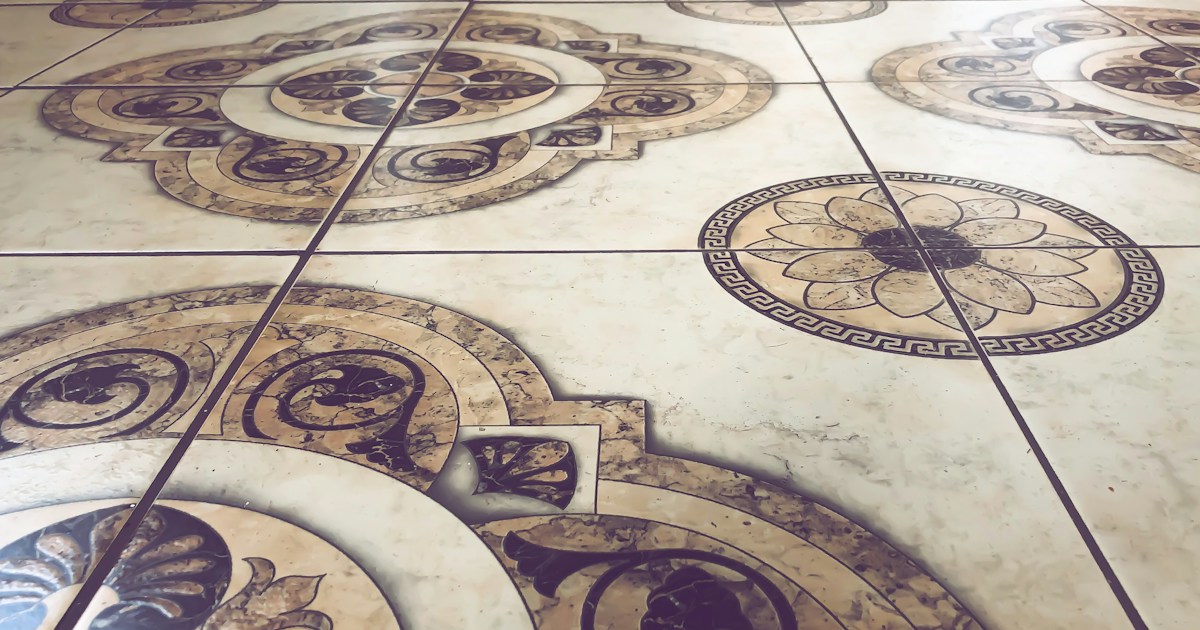
Tile installation ranges from basic 12×12 floor tile ($5-$8/sq ft) to high-end custom work ($15-$30/sq ft). The premium end — large-format porcelain (24×48, 48×48), herringbone and chevron patterns, shower systems with linear drains, and waterproof membrane installation — is where the money is.
A complete bathroom tile renovation (floor, walls, shower, niche) routinely runs $8,000-$20,000 and takes 5-10 days. Skilled tile setters who can execute complex layouts, properly waterproof showers (Schluter, Laticrete Hydro Ban), and install large-format tile without lippage are in very high demand.
3. Waterproof Flooring Systems
Average job: $2,000-$8,000 | Margin: 45-55%
Waterproof flooring — premium LVP (COREtec, Shaw Floorté), waterproof laminate, and tile with membrane systems — has become the dominant choice for kitchens, bathrooms, basements, and pet-owner homes. The installation commands a premium over standard flooring because it requires proper moisture testing, subfloor preparation, and sometimes membrane installation.
The upsell opportunity: when a homeowner asks for flooring in a moisture-prone area, recommend a complete waterproof system — moisture barrier, premium waterproof LVP or tile with membrane, and sealed transitions. The total job value increases 30-50% over a basic installation.
4. Staircase Flooring Installation
Average job: $1,500-$5,000 | Margin: 55-65%
Staircase work — hardwood or LVP treads, risers, nosing, and railings — is one of the most profitable per-hour services in flooring. It's time-intensive (each stair tread requires precise measurement, cutting, and fitting), the material waste is high, and most flooring installers avoid it because it's difficult.
Pricing: $75-$150 per tread (plus risers and nosing) for hardwood, $50-$100 per tread for LVP. A standard 13-step staircase runs $1,000-$2,500 for LVP or $1,500-$4,000 for hardwood. The work takes 1-2 days and is highly visible — a well-done staircase is your best portfolio piece.
5. Commercial Flooring Contracts
Average job: $5,000-$100,000+ | Margin: 35-45%
Commercial flooring — offices, retail stores, restaurants, medical facilities, schools — offers significantly larger project values and recurring relationships. A single commercial client can generate $20,000-$100,000+ per year in repeat work.
Commercial advantages:
- Larger project sizes with more consistent timelines
- Recurring relationships (offices renovate, retail remodels, apartment turnovers)
- Less price sensitivity — commercial clients value reliability and timeline adherence
- After-hours work means less competition from residential-focused installers
Commercial flooring often involves VCT (vinyl composition tile), commercial carpet tile, sheet vinyl, and polished concrete — products not common in residential work. Learning these systems opens a market that most residential flooring contractors can't access.
Whether you're quoting a homeowner's kitchen LVP or a 10,000 sq ft office carpet tile installation, professional estimates close more deals. BlueBee App lets you maintain separate price lists for residential and commercial, build itemized proposals from your phone, and send them instantly. Approvals become invoices with one tap. Free on the App Store.
6. Epoxy and Decorative Concrete Coatings
Average job: $2,000-$8,000 | Margin: 50-60%
Epoxy, polyurea, and polyaspartic floor coatings for garages, basements, and commercial/industrial spaces are a fast-growing market segment. The material cost is $0.50-$2.00/sq ft, installation takes 1-2 days, and you charge $3.00-$8.00/sq ft installed.
Decorative options — metallic epoxy, flake systems, and custom colors — command even higher prices ($6-$12/sq ft) and produce stunning before/after photos that drive social media marketing. The barrier to entry is equipment (diamond grinder or shot blaster: $3,000-$8,000) and training, which keeps competition manageable.
7. Hardwood Floor Installation with Custom Finishes
Average job: $5,000-$20,000+ | Margin: 45-55%
Premium hardwood installation — wide plank, herringbone, chevron patterns, custom stain colors, and site-finished (sanded and finished in place rather than pre-finished) — is the pinnacle of residential flooring. These projects command $8-$20/sq ft installed and attract high-end clients who value craftsmanship and are willing to pay for it.
This market requires advanced skills: precise layout for patterns, expertise with different wood species, sanding technique for site-finished floors, and knowledge of oil-based vs. water-based finishes. But the payoff is exceptional — both in margins and in the portfolio pieces that attract more premium clients.
How to Add Specialty Services
- Year 1: Master LVP and basic hardwood installation. Add hardwood refinishing (high margin, moderate learning curve).
- Year 2: Add tile installation (bathrooms and kitchens are the highest-demand areas). Develop staircase expertise.
- Year 3: Pursue commercial contracts or add epoxy coatings. Both open new revenue streams with different client bases.
The Bottom Line
Basic flooring installation pays the bills, but specialty services build wealth. Hardwood refinishing, custom tile, waterproof systems, stairs, commercial contracts, epoxy coatings, and premium hardwood installation each offer higher margins and less price competition than commodity LVP and carpet work. Pick 2-3 specialties that match your skills and market, invest in the training and tools to do them right, and price your expertise accordingly. The flooring contractors who specialize are the ones who earn the most and get the best clients.