
Why Concrete Is a Powerhouse Trade Business
Concrete is literally the foundation of construction. Every home, every commercial building, every road, every sidewalk, every parking lot requires concrete work. The U.S. concrete industry generates over $65 billion annually, and demand grows with every new construction project and every aging structure that needs repair.
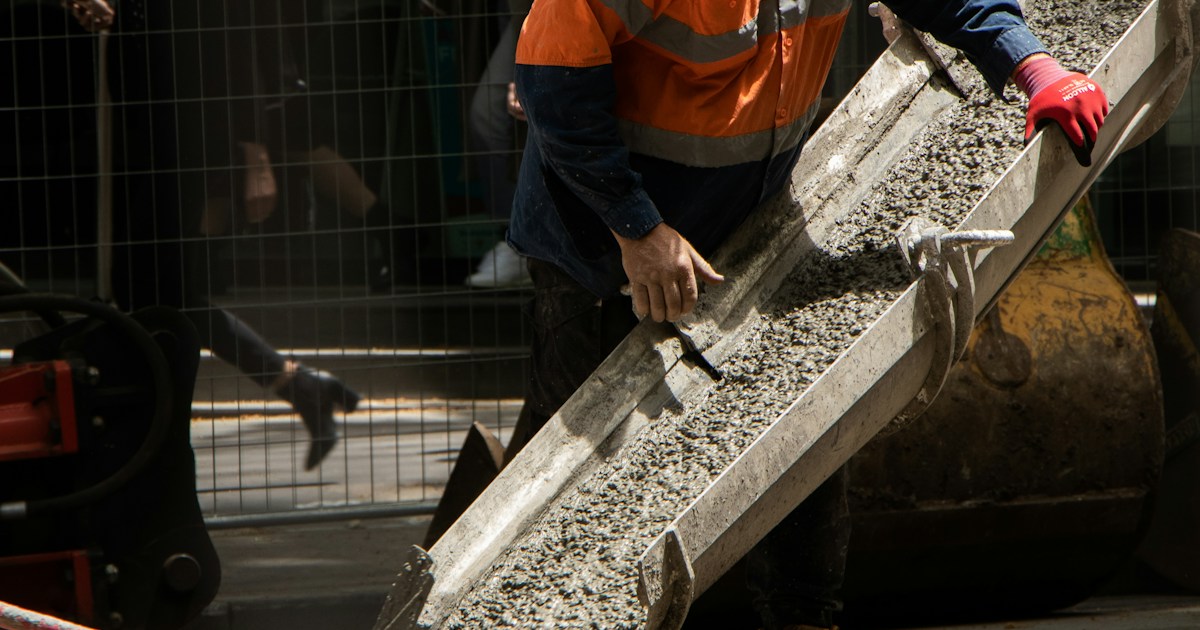
Unlike some trades where technology threatens to automate the work, concrete installation remains intensely manual — it requires skill, timing, physical capability, and experience. Machines can mix and deliver concrete, but finishing it properly is still a human craft. That skill barrier protects your earnings.
A solo concrete finisher with a small crew can earn $80,000-$150,000+ per year. A concrete contractor with 2-4 crews routinely generates $500,000-$2,000,000+ in annual revenue. The path from finisher to business owner is proven and the market supports growth in virtually every region.
Step 1: Choose Your Concrete Specialties
Concrete work spans a wide range of services. Most successful contractors start narrow and expand:
- Flatwork (driveways, patios, sidewalks, garage floors): The bread and butter of residential concrete. Lower barrier to entry, steady demand, and manageable project sizes for new businesses.
- Foundations: Residential and commercial foundations — footings, walls, slabs. Higher skill requirement and typically requires working with general contractors.
- Decorative concrete: Stamped, stained, exposed aggregate, polished concrete. Premium pricing and growing demand from homeowners wanting custom finishes.
- Concrete repair and resurfacing: Mudjacking, leveling, crack repair, overlays. Lower material costs and recurring demand from aging concrete.
- Retaining walls: Poured concrete, block, and segmental retaining walls. Combines concrete and masonry skills. High-value projects.
- Commercial/industrial: Tilt-up walls, commercial slabs, parking structures. Largest project values but requires significant equipment and bonding capacity.
Best starting point: Residential flatwork (driveways, patios, walkways) and simple slab work. These projects are manageable with a small crew, don't require heavy equipment beyond a basic setup, and build the skills and reputation needed for larger work.
Step 2: Legal Requirements
- Contractor's license: Most states require a concrete contractor's license. Many categorize it under "general contractor" or have a specific concrete/masonry classification. California requires a C-8 Concrete license. Florida requires a "Concrete Contractor" certificate. Check your state's requirements — exam and experience requirements vary.
- Business registration: LLC strongly recommended. Concrete work has significant liability exposure (structural failures, property damage, water damage from improper grading). $50-$500.
- General liability insurance: $1M minimum, $2M recommended. Concrete-specific risks include structural defects, property damage from equipment, and trip-and-fall on completed work. $1,200-$3,000/year.
- Workers' comp: Required with employees. Concrete has higher rates (10-20% of payroll) due to physical labor and injury risk.
- Bonding: May be required for commercial work and government contracts. Performance bonds typically cost 1-3% of the contract value.
- Permits: Most concrete work (driveways, patios, foundations) requires building permits. Know your local requirements.
Step 3: Essential Equipment
Flatwork Starter Kit ($15,000-$40,000)
- Concrete finishing tools: Bull float, fresno, edgers, groovers, hand floats, mag floats, broom — $500-$1,000.
- Concrete vibrator: For consolidating concrete in forms — $200-$500.
- Power screed: Vibratory screed for leveling — $300-$800.
- Concrete saw: Walk-behind concrete saw for cutting control joints — $1,000-$3,000.
- Forms and stakes: Steel or aluminum forms, wood forming materials — $500-$1,500.
- Wheelbarrows and buggies: $200-$600.
- Laser level: For grading and slope — $300-$800.
- Plate compactor: For compacting sub-base — $500-$1,500.
- Skid steer or mini excavator: For demolition and grading — $15,000-$35,000 used (or rent at $200-$400/day).
- Dump trailer: For hauling demo and materials — $5,000-$10,000.
- Work truck: 3/4-ton or 1-ton with towing capacity — $20,000-$40,000 used.
Total realistic startup: $40,000-$100,000 (including vehicle). Concrete has higher startup costs than many trades, but the revenue per project is proportionally higher.
Cost-saving strategy: Rent heavy equipment (skid steer, excavator) for the first year. Only buy when you're using it 3+ days per week.
Step 4: Pricing Concrete Work
Concrete is priced per square foot for flatwork, per linear foot for curbing and walls, and per cubic yard for volume-based work:
Residential Flatwork Pricing (2026)
- Standard broom-finish driveway: $8-$15/sq ft (installed, including concrete)
- Patio: $8-$14/sq ft
- Sidewalk: $8-$12/sq ft
- Garage floor/slab: $7-$12/sq ft
- Stamped concrete: $12-$25/sq ft
- Exposed aggregate: $10-$18/sq ft
- Colored concrete: $10-$16/sq ft
Other Concrete Services
- Foundation footings: $5-$10/linear foot
- Foundation walls: $15-$30/linear foot
- Retaining walls (poured): $20-$40/sq ft of face
- Concrete removal (demo): $2-$6/sq ft
- Grading and sub-base: $1-$3/sq ft
- Rebar/wire mesh: $0.50-$1.50/sq ft
Material Costs (Know Your Numbers)
- Ready-mix concrete: $130-$180/cubic yard (delivered). A 600 sq ft driveway at 4" thick requires approximately 7.5 cubic yards = $975-$1,350 in concrete alone.
- Rebar (#4): $0.75-$1.25/linear foot
- Wire mesh: $0.15-$0.30/sq ft
- Gravel sub-base: $25-$50/ton
- Forms (rental): $0.50-$1.00/linear foot per use

Concrete estimates need to account for demolition, grading, sub-base, forming, reinforcement, concrete, finishing, and sealing — every step itemized. BlueBee App lets you save your concrete services by type — demo per sq ft, flatwork per sq ft, stamped per sq ft — and build itemized estimates on your phone at the job site. Send it before you leave. When approved, convert to invoice and collect deposit by card. Download free on the App Store.
Step 5: Finding Clients
- General contractors and builders: The #1 source for concrete work. Builders need foundations, slabs, driveways, and walkways on every project. One relationship with an active builder can generate $50,000-$200,000+ per year.
- Google Business Profile: "Concrete contractor near me" and "driveway replacement" are high-intent searches. Complete your profile with before/after photos of finished work.
- Home shows and local advertising: Decorative concrete (stamped, stained) sells especially well when homeowners can see samples and finished work in person.
- Real estate developers: New subdivisions need driveways, sidewalks, and curbing for every lot — massive volume if you can handle the schedule.
- Municipal contracts: Sidewalk repair, curb replacement, and ADA ramps — government work is steady and pays well but requires bonding and competitive bidding.
- Referrals from related trades: Landscapers, excavators, and remodelers frequently need concrete work and will refer if you deliver quality and reliability.
Step 6: Build Repeatable Systems
- Pre-pour checklist: Grade elevation, sub-base compaction, form alignment, reinforcement placement, expansion joints, weather check. A systematic approach prevents the costly mistakes that haunt concrete work (you can't easily fix concrete once it's set).
- Crew efficiency: Concrete is time-sensitive — once the truck arrives, the clock starts. Have enough crew on-site to handle the volume. A standard pour crew: 1 finisher, 2-3 laborers for a typical residential flatwork job.
- Digital estimates and invoicing: Every concrete job needs a detailed estimate with scope, materials, timeline, and payment terms. BlueBee App handles estimates, invoices, and card payments from your phone. Start free at $9.99/month unlimited.
- Weather management: Concrete can't be poured in freezing temperatures or heavy rain. Build weather contingency into your schedule and communicate proactively with clients about delays.

The Bottom Line
Concrete is a demanding trade with higher startup costs but exceptional revenue potential. The work is physically hard, time-sensitive, and unforgiving of mistakes — qualities that protect skilled contractors from competition. Start with residential flatwork, build relationships with builders and GCs, price for profit, and deliver quality work on schedule. Concrete contractors who show up on time, deliver clean work, and communicate professionally are always in demand — the trade rewards reliability and craftsmanship above all else.