
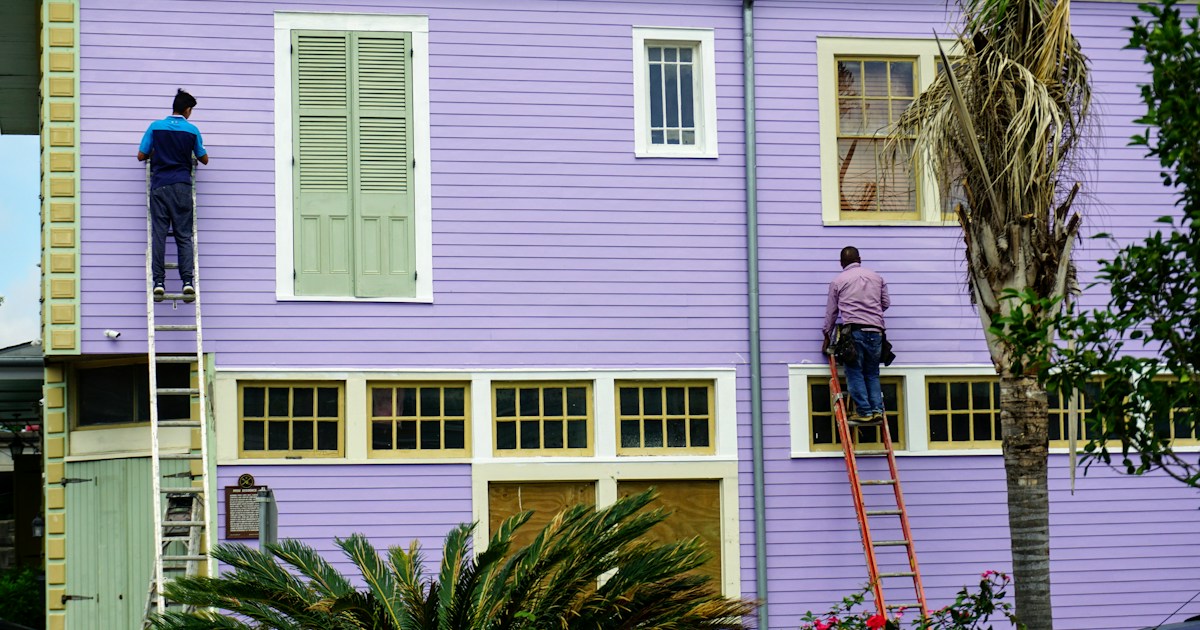
Why Painting Is One of the Easiest — and Most Profitable — Trades to Start
If you're looking for a trade business you can start fast, with minimal capital, and scale to six figures within 12-18 months, painting is hard to beat. Unlike electrical, plumbing, or HVAC, painting typically doesn't require a trade-specific license in most states (though a general contractor's license or business license may be needed). The learning curve is manageable, the startup costs are among the lowest in the trades, and the demand never stops — every building ever built will need repainting.
The numbers back this up. The U.S. painting industry generates over $45 billion annually. The average painting contractor earns $50,000-$80,000 as a solo operator, and multi-crew operations routinely clear $200,000-$500,000+ per year. With the right pricing strategy and business systems, painting is a legitimate path to a high-income business.
Step 1: Legal Setup — Get the Basics Right
While painting doesn't require a master's license like electrical or plumbing, you still need to set up your business properly:
- Business registration: Register an LLC in your state. This protects your personal assets from business liabilities. Cost: $50-$500 depending on your state.
- EPA Lead-Safe Certification (RRP): If you'll work on homes built before 1978 (which is most of them), you must be EPA Lead Renovation, Repair, and Painting (RRP) certified. This is federal law, not optional. The certification course takes 1 day and costs $200-$300. Fines for non-compliance: up to $37,500 per day.
- General liability insurance: $1M minimum coverage. Expect to pay $400-$800/year as a solo painter. This covers property damage (you will drip paint on something eventually) and injuries.
- Workers' compensation: Required once you hire employees. Rates vary by state but expect 5-10% of payroll for painting.
- Business license: Most cities and counties require a general business license. Some states require a contractor's license above a certain dollar threshold (e.g., California requires a C-33 Painting License for jobs over $500).
Step 2: Equipment — What You Actually Need to Start
One of painting's biggest advantages: you don't need a $50,000 truck or $20,000 in specialized tools. Here's what a professional painting operation actually requires:
Essential Starter Kit ($2,000-$5,000)
- Airless paint sprayer: A Graco Magnum X5 or X7 ($300-$500) will handle 90% of residential work. This is your single most important piece of equipment — it multiplies your speed 3-5x over brush and roller alone.
- Brushes and rollers: Quality matters. Purdy or Wooster brushes ($10-$20 each), roller frames and covers in multiple nap lengths — $100-$200 total.
- Drop cloths: Canvas, not plastic. Canvas absorbs drips, plastic spreads them. Get several sizes — $100-$200.
- Ladders: A 6-ft stepladder and a 24-ft extension ladder cover most residential work — $200-$400.
- Prep tools: Scrapers, putty knives, sandpaper, caulk guns, painter's tape (3M Blue), plastic sheeting — $100-$200.
- Safety equipment: Respirator (not a dust mask — a proper half-face respirator with P100 filters), safety glasses, gloves — $50-$100.
- Transportation: A used cargo van or pickup truck with cap — $10,000-$25,000. You can start with a personal vehicle and trailer if needed.
Total realistic startup: $12,000-$30,000 (including vehicle). Without the vehicle, you're looking at $2,000-$5,000 in equipment — one of the lowest entry points in the trades.
Step 3: Learn What Separates Amateurs from Professionals
Anyone can put paint on a wall. What separates a $25/hour painter from a $75/hour painter is preparation, technique, and attention to detail:
- Surface preparation is 80% of the job. Washing, scraping, sanding, filling holes, caulking gaps, priming — this is where quality lives. A beautifully sprayed finish coat over poorly prepped surfaces will peel within a year.
- Cut lines matter. The ability to cut clean, straight lines where walls meet ceilings, trim, and other surfaces — without tape — is the skill that defines a professional painter. Practice until your freehand cut is razor-sharp.
- Product knowledge. Know your paints: when to use latex vs. oil-based, flat vs. satin vs. semi-gloss, primer types, specialty coatings. Sherwin-Williams and Benjamin Moore both offer free training for contractors.
- Color consultation. Being able to help clients choose colors (or partner with a color consultant) adds value and closes more sales.
Step 4: Price for Profit, Not Just Survival
Pricing is where most new painting contractors fail. They price based on what they think the market will bear, or worse, what the cheapest competitor charges. Instead, price based on your costs plus your target profit margin.
The Pricing Formula
Price = (Materials + Labor + Overhead) × Profit Margin
Typical Pricing Benchmarks (2026)
- Interior painting: $2.50-$5.00 per square foot of wall space (includes prep, 2 coats, and cleanup)
- Exterior painting: $1.50-$4.00 per square foot of paintable surface
- Interior room: $350-$800 per average room (walls and ceiling)
- Full interior (3BR home): $3,000-$8,000
- Full exterior (2,000 sq ft home): $3,500-$7,000
- Kitchen cabinets: $3,000-$7,000 (high labor, high margin)
- Deck staining: $800-$2,500
Target margins: 35-50% gross profit on materials, 50-65% gross profit on labor. If you're not hitting at least 35% net profit on each job, your prices are too low.
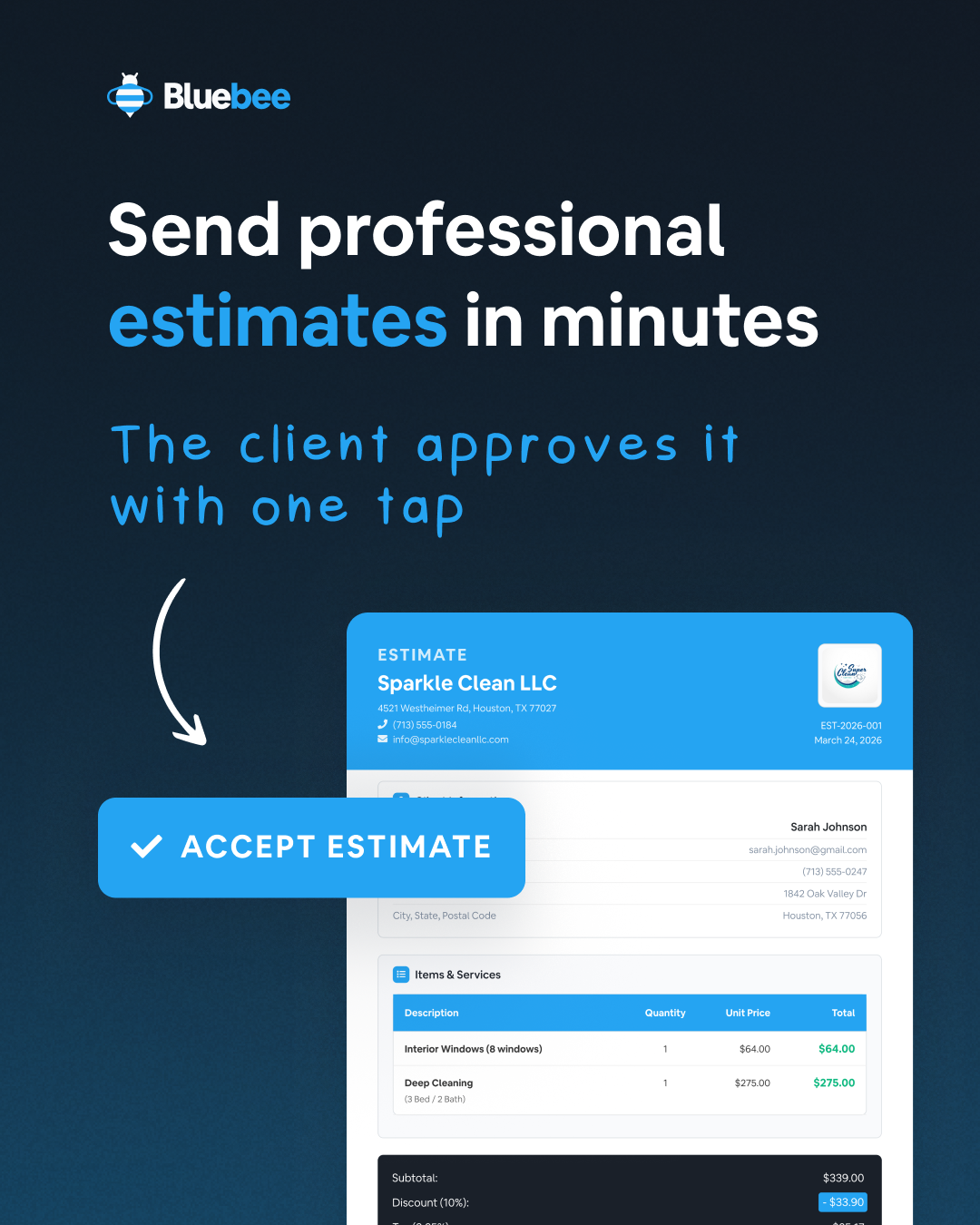
Professional estimates win more jobs at higher prices. Homeowners compare painters all the time — the one who sends a branded, itemized proposal with scope, materials, timeline, and warranty stands out from the one who scribbles a number on a napkin. BlueBee App lets you build a painting price list, create polished estimates from your phone while still at the walkthrough, and send them instantly. When the client approves, convert to invoice and collect payment by card — no chasing checks. Download it free on the App Store.
Step 5: Land Your First Clients
The first 10 clients are the hardest. After that, referrals and reviews build momentum. Here's how to get those first 10:
- Friends, family, and neighbors: Offer competitive (not free) rates in exchange for honest reviews and referral permission. Do exceptional work and photograph everything.
- Google Business Profile: Set this up immediately. It's free, and it's the #1 way homeowners find local painters. Upload before/after photos of every job.
- Nextdoor: Neighbors recommending painters to neighbors is incredibly powerful. Claim your business page and engage authentically.
- Realtor partnerships: Real estate agents constantly need painters for pre-listing prep. One good agent relationship can generate 10-20 jobs per year.
- Property managers: Apartment complexes, rental properties, and commercial buildings need regular repainting. These relationships generate recurring revenue.
- Google Local Service Ads: Pay-per-lead advertising specifically for service trades. You only pay when someone contacts you.
Step 6: Build Systems from Day One
The painters who stay solo at $50,000/year and the ones who build $300,000+ businesses have one key difference: systems.
- Estimate templates: A standardized process for walkthroughs, measurements, and pricing so every estimate is consistent and professional.
- Job documentation: Before/after photos of every project. These are your portfolio, your proof of quality, and your marketing content.
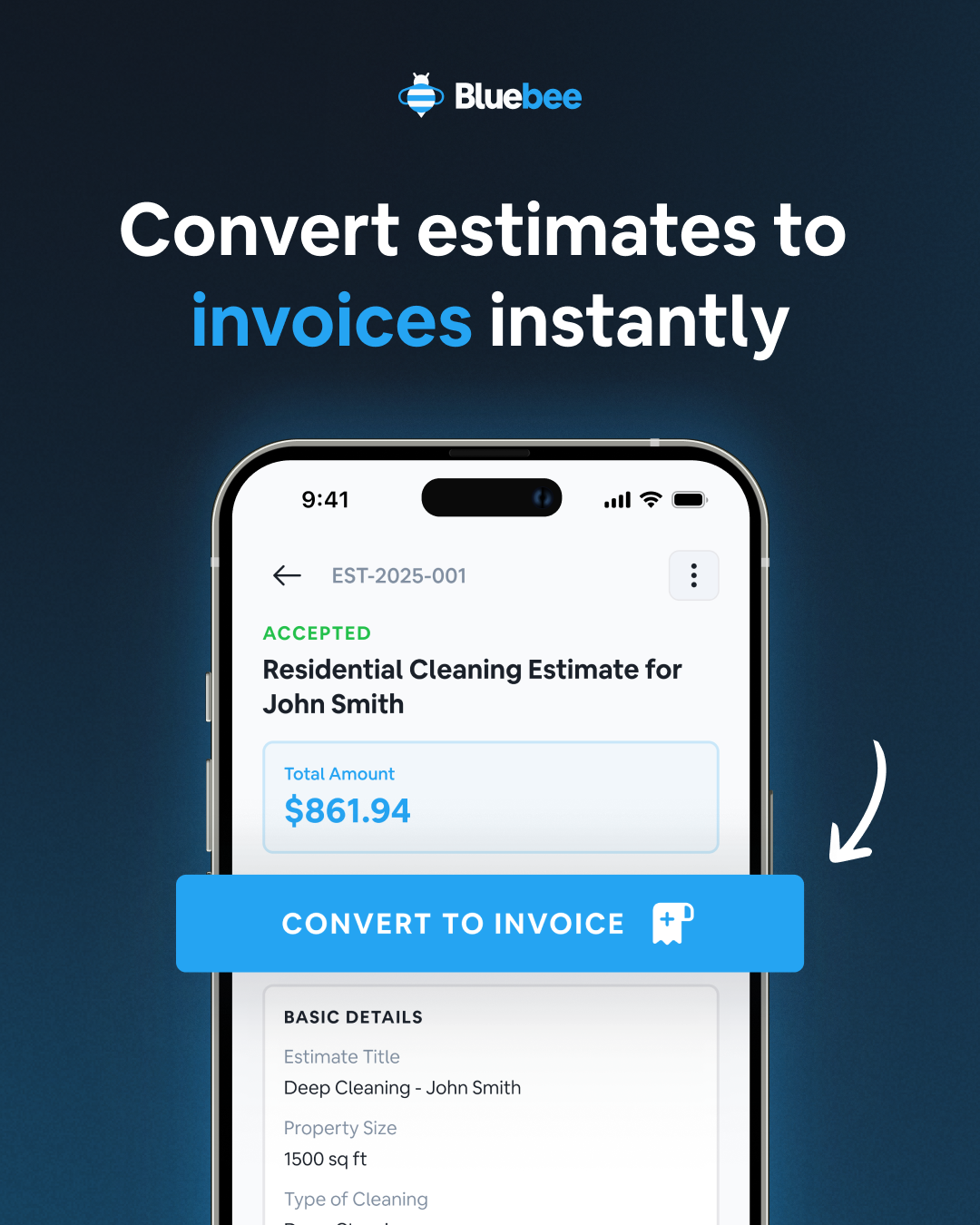
- Digital invoicing: Professional invoices sent immediately after job completion with easy payment options. Tools like BlueBee App handle estimates, invoicing, and card payments from your phone — start free or go unlimited at $9.99/month.
- Review collection: Ask every satisfied client for a Google review within 24 hours of completing the job. Make it easy — send them a direct link to your review page.
- Follow-up schedule: Contact past clients annually about repainting needs. Interior paint lasts 5-7 years, exterior 5-10 years. Your past clients are your best future clients.
Step 7: When to Hire Your First Painter
The math is simple: when you're consistently turning down work because you're booked 3-4 weeks out, it's time to hire. Your first hire should be able to prep and paint independently while you focus on estimates, client relations, and quality control.
- Pay structure: $18-$28/hour for experienced painters (varies by market). Some contractors pay per square foot or per room to incentivize speed.
- Bill rate vs. pay rate: If you pay a painter $22/hour and bill the client $55/hour for that painter's time, your gross margin on their labor is 60%. This is how multi-crew operations become highly profitable.
- Quality control: Walk every job before the final walkthrough with the client. Your reputation depends on consistent quality across every crew.
The Bottom Line
A painting business is one of the fastest paths from zero to six figures in the trades. Low startup costs, minimal licensing barriers, strong demand, and high margins make it ideal for first-time trade business owners. The keys to success: invest in proper equipment (especially a good sprayer), master your prep work and cut lines, price for profit not survival, present yourself professionally with branded estimates, and build systems that let you scale beyond solo work. The demand is there — every building ever built needs repainting on a cycle. Build the business to capture that demand.