
The Simple Math Behind Profitable Flooring Jobs
Flooring pricing is more straightforward than most trades because nearly everything is priced by the square foot. Once you know your cost per square foot (materials + labor + overhead) and your target profit margin, you can estimate any flooring job in minutes.
But "simple" doesn't mean "easy to get right." The flooring contractors who consistently make money are the ones who account for every cost — removal, subfloor prep, transitions, waste factor, furniture moving — and present their estimates in a way that communicates value, not just price. This guide covers the complete pricing system.
Step 1: Measure Accurately
Every flooring estimate starts with precise measurements. Errors here cost you money — underestimate and you eat the difference; overestimate and the client questions your competence.
- Measure each room independently. Length × width for rectangular rooms. Break irregular rooms into rectangles and add them together.
- Measure at the widest points. Walls aren't always straight. Measure at multiple points and use the largest dimension.
- Include closets and alcoves. These are easy to miss but add square footage — and cost if you didn't account for them.
- Count transitions. Every doorway, room change, and height change needs a transition piece. Count them during measurement.
- Note existing conditions: Current flooring type (affects removal cost), subfloor type (concrete vs. plywood), visible damage or unevenness, door swing clearance (may need undercutting).
Step 2: Calculate Material Costs
Material Cost per Square Foot (2026 Contractor Pricing)
- Luxury vinyl plank (LVP): $1.50-$4.00/sq ft
- Engineered hardwood: $3.00-$8.00/sq ft
- Solid hardwood: $4.00-$12.00/sq ft
- Ceramic tile: $1.00-$5.00/sq ft
- Porcelain tile: $2.00-$8.00/sq ft
- Laminate: $1.00-$3.00/sq ft
- Carpet: $1.00-$5.00/sq ft (plus $0.30-$0.60 pad)
Always add waste factor: 10% for straight-lay installations, 15% for diagonal or herringbone patterns, 20% for complex rooms with many cuts.
Underlayment and Supplies
- Underlayment (foam, cork, or moisture barrier): $0.25-$1.00/sq ft
- Thinset mortar (tile): $0.15-$0.30/sq ft
- Grout (tile): $0.10-$0.25/sq ft
- Adhesive (glue-down): $0.30-$0.60/sq ft
- Transitions: $5-$25 each (material cost)
- Baseboards/quarter round: $0.50-$2.00/linear foot (material)
Step 3: Calculate Labor Costs
Your labor rate should cover your target income, overhead, and profit. Here's how to calculate it:
Production Rates (Experienced Installer)
- LVP click-lock: 200-350 sq ft per day (solo installer)
- Engineered hardwood (floating): 200-300 sq ft per day
- Solid hardwood (nail-down): 150-250 sq ft per day
- Tile (12×12 or larger): 80-150 sq ft per day
- Tile (small format/mosaic): 40-80 sq ft per day
- Laminate: 250-400 sq ft per day
- Carpet: 300-600 sq ft per day
- Hardwood sand and refinish: 200-400 sq ft per day (3-coat system takes 3-4 days)
If your target daily income is $500 and you install 250 sq ft of hardwood per day, your labor rate is $2.00/sq ft. Add overhead (insurance, vehicle, tools) at $0.50-$1.50/sq ft, and your labor + overhead rate is $2.50-$3.50/sq ft.
Step 4: The Complete Pricing Formula
Total Price = (Materials + Waste) + (Labor + Overhead) + Add-Ons + Profit Margin
Example: 500 sq ft LVP Installation
- Material (LVP + underlayment): $2.50/sq ft × 550 sq ft (10% waste) = $1,375
- Labor + overhead: $3.00/sq ft × 500 sq ft = $1,500
- Old carpet removal: $1.00/sq ft × 500 sq ft = $500
- Transitions (5): $15 each = $75
- Baseboards reinstall: $1.50/LF × 100 LF = $150
- Subtotal: $3,600
- Profit margin (20%): $720
- Total estimate: $4,320 ($8.64/sq ft all-in)
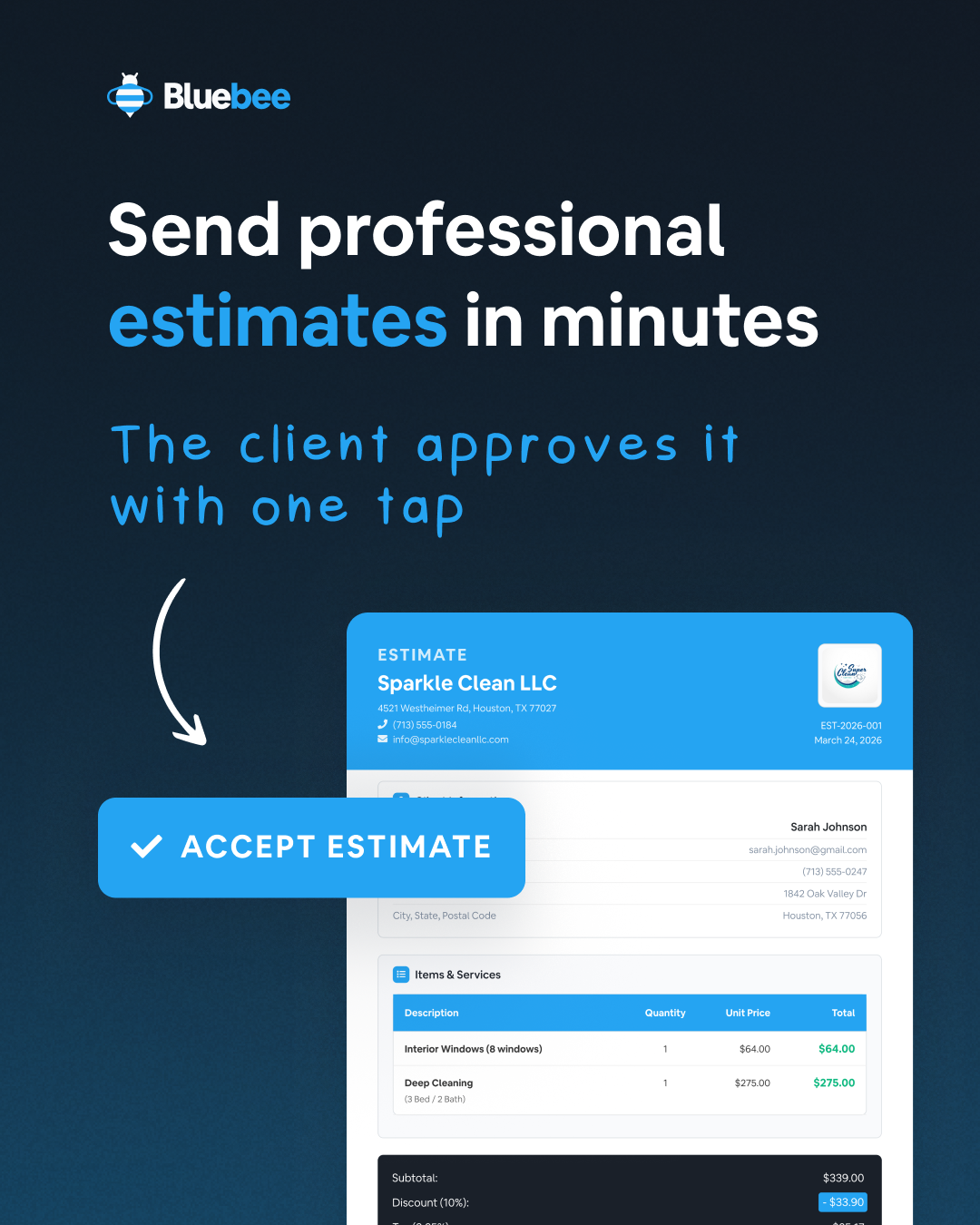
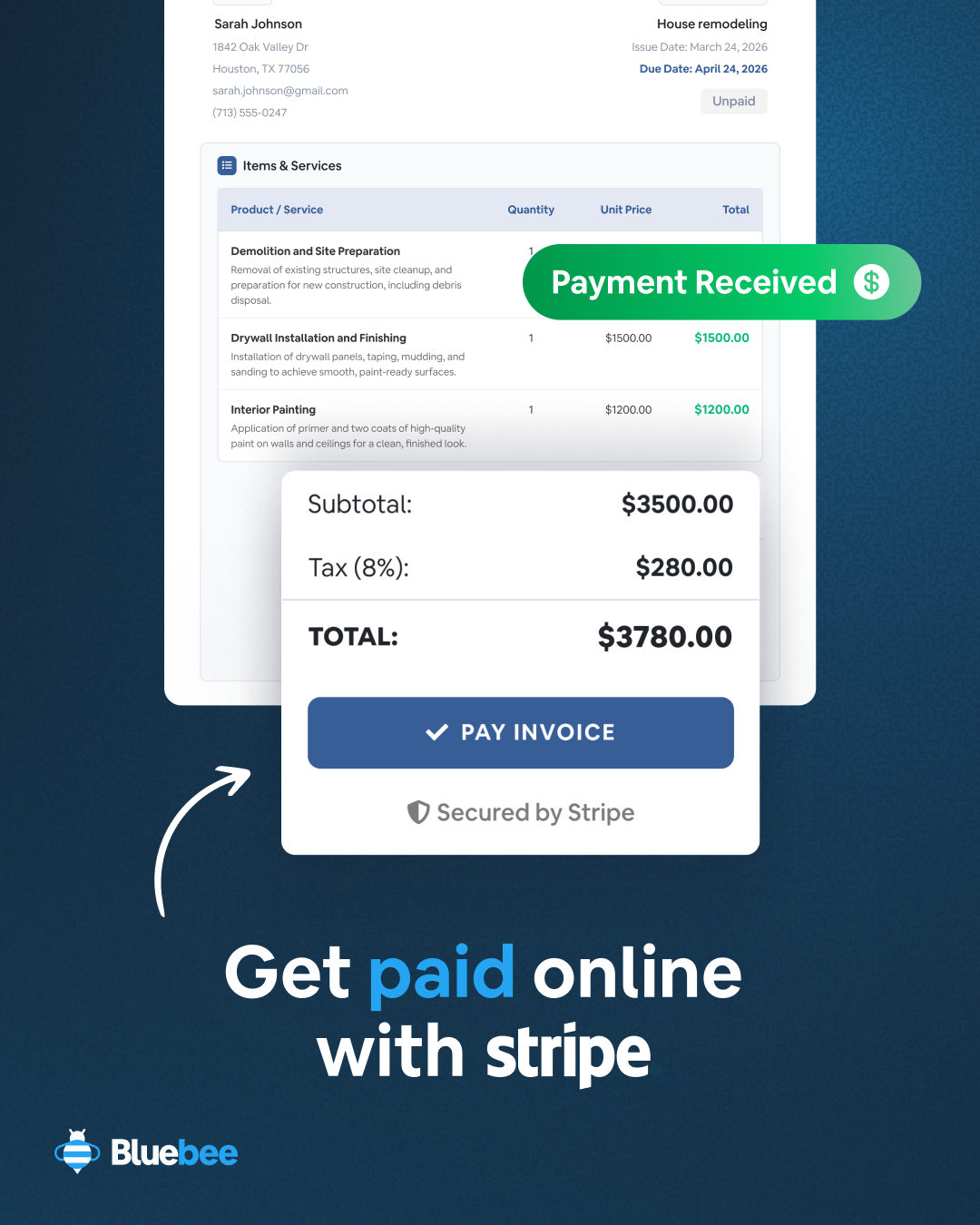
Building flooring estimates with this level of detail used to mean a spreadsheet and an hour at home. BlueBee App lets you save your flooring rates as a service catalog — LVP per sq ft, tile per sq ft, removal, prep, trim — and assemble a professional, itemized estimate from your phone in minutes at the client's home. Send it instantly and collect the deposit when they approve. Free on the App Store.
Step 5: Present Like a Professional
What Your Flooring Estimate Should Include
- Company branding: Logo, name, contact, license info.
- Room-by-room breakdown: Square footage per room with flooring type specified.
- Material specified: Brand, product name, color/style. "Shaw Coventry LVP, Aged Oak" beats "vinyl plank."
- Scope of work: What's included — removal, prep, installation, transitions, trim, cleanup.
- What's NOT included: Furniture moving, appliance disconnection, subfloor structural repair. Clarity prevents disputes.
- Timeline: Start date and expected duration.
- Warranty: Your workmanship warranty plus manufacturer warranty.
- Payment terms: Deposit amount (typically 30-50%), balance upon completion.
The Good-Better-Best Approach
Offer three material tiers when possible:
- Good: Budget LVP, basic tile — $5.50/sq ft installed
- Better: Premium LVP, mid-range tile or engineered hardwood — $8.00/sq ft installed
- Best: Solid hardwood, large-format porcelain, premium brand — $12.00/sq ft installed
Most clients pick the middle option. You've given them options without overwhelming them, and the middle option feels like good value anchored against the premium price.
Common Pricing Mistakes
- Forgetting removal costs: Old flooring doesn't remove itself. Tile removal on concrete can take longer than the new installation. Always price it.
- Ignoring subfloor prep: Uneven subfloors need leveling compound ($2-$5/sq ft). This is the most commonly missed cost and the biggest profit killer.
- Underestimating tile labor: Tile installation with complex patterns, small formats, or diagonal layouts takes 2-3x longer than simple straight-lay. Price the actual time, not the easy version.
- Not charging for furniture moving: If clients expect you to move furniture, charge for it. It adds hours to every job and risks damage claims.
- Quoting material only: Some homeowners compare your all-in price to the per-square-foot price on the box at Home Depot. Break your estimate into material and labor lines so the comparison is apples to apples.
The Bottom Line
Flooring pricing is math — measure precisely, know your costs per square foot for each flooring type, account for every add-on (removal, prep, transitions, trim), and apply your target profit margin. Present your estimates professionally with room-by-room breakdowns and material specifications, offer tiered options, and follow up promptly. The flooring contractors who price accurately, present professionally, and communicate value consistently are the ones who build profitable, sustainable businesses.