
The Mowing Trap
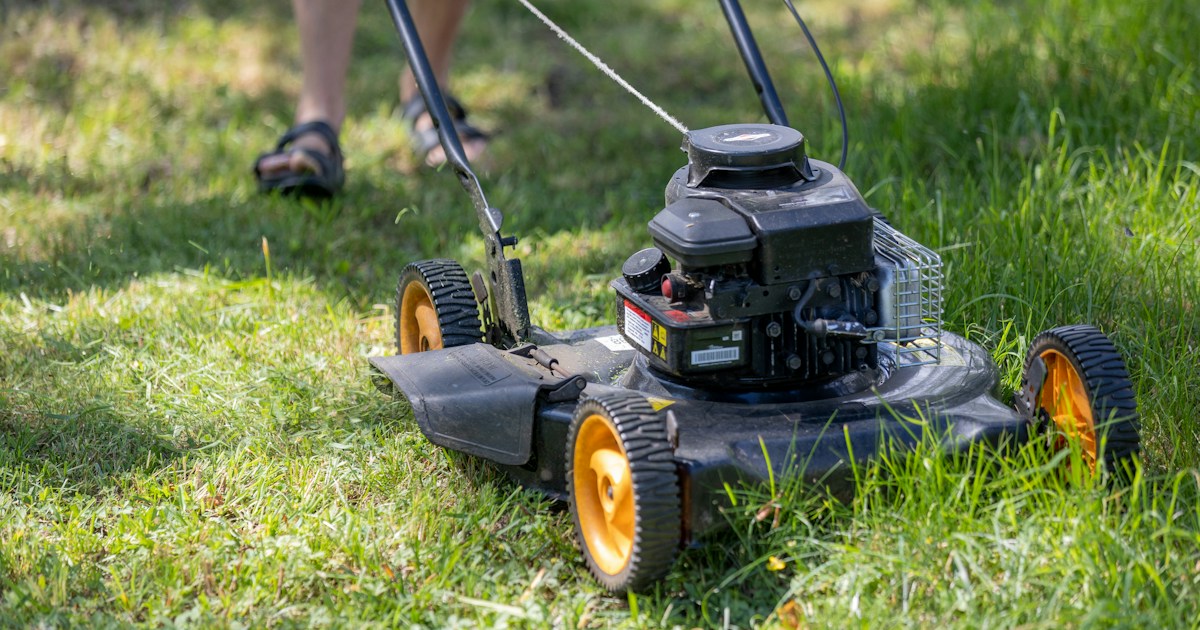
Here's the uncomfortable math most landscapers don't want to face: if your average mowing client pays $55 per visit, and you can mow 8 lawns per day, that's $440/day or about $110,000 per year working five days a week for 50 weeks. Subtract fuel, equipment, insurance, and taxes, and you're probably taking home $55,000-$65,000.
That's a decent living. But you're working physically demanding days, you're weather-dependent, and you're stuck in a cycle where the only way to earn more is to mow more lawns — which means longer days or hiring help (which eats your margins).
The landscaping businesses clearing $150K, $250K, even $500K+ aren't doing it by mowing twice as many lawns. They're doing it by offering higher-margin services to the clients they already have. Your mowing clients are your warmest leads for these upsells — you're already on their property every week, you already have their trust, and you're already seeing opportunities they might not notice.
1. Landscape Lighting
Average job: $1,500-$5,000+ | Margin: 50-65%
Landscape lighting is one of the highest-margin services in the green industry. The materials (LED path lights, spotlights, transformers, wire) cost $300-$1,200 for a typical residential installation. Your labor is 4-8 hours. And the client is paying for the transformation of their property at night — that's a value-based sale, not a cost-based one.
The best part: you can offer it to every single mowing client. "I noticed your beautiful oak trees and that stone pathway. Have you ever considered landscape lighting? It would really showcase what you already have." That one sentence, said to the right homeowner, can turn a $55 mowing client into a $3,000 lighting client.
Low-voltage landscape lighting requires no electrical license in most states, and the learning curve is manageable. One weekend training course or a few YouTube tutorials can get you started.
2. Mulching and Bed Maintenance
Average job: $300-$800 | Margin: 55-70%
Mulching is the gateway upsell. Every mowing client has landscape beds, and every landscape bed needs fresh mulch at least once a year. Your material cost is $25-$40 per cubic yard, and you're charging $65-$85 per yard installed. A typical property takes 4-6 yards, so you're looking at $260-$510 in revenue for 1.5-3 hours of work.
Bundle bed maintenance with your mowing contracts: "For clients on our weekly plan, we offer spring bed preparation and mulching at 10% off." This locks in the upsell before another company can get to your client first.
3. Lawn Treatments (Fertilization and Weed Control)
Average per application: $50-$100 | Margin: 60-75% | Recurring: 5-7 applications per year
This is recurring revenue on autopilot. A typical residential lawn treatment program is 5-7 applications per season (pre-emergent, fertilizer, post-emergent weed control, fall feed). At $65 per application on a standard lawn, that's $325-$455 per client per year on top of their mowing contract.
The material cost per application is $8-$15 for a standard residential lawn. The margin is enormous. You need a pesticide applicator license in most states (usually a short course and exam), but the ROI is worth it many times over.
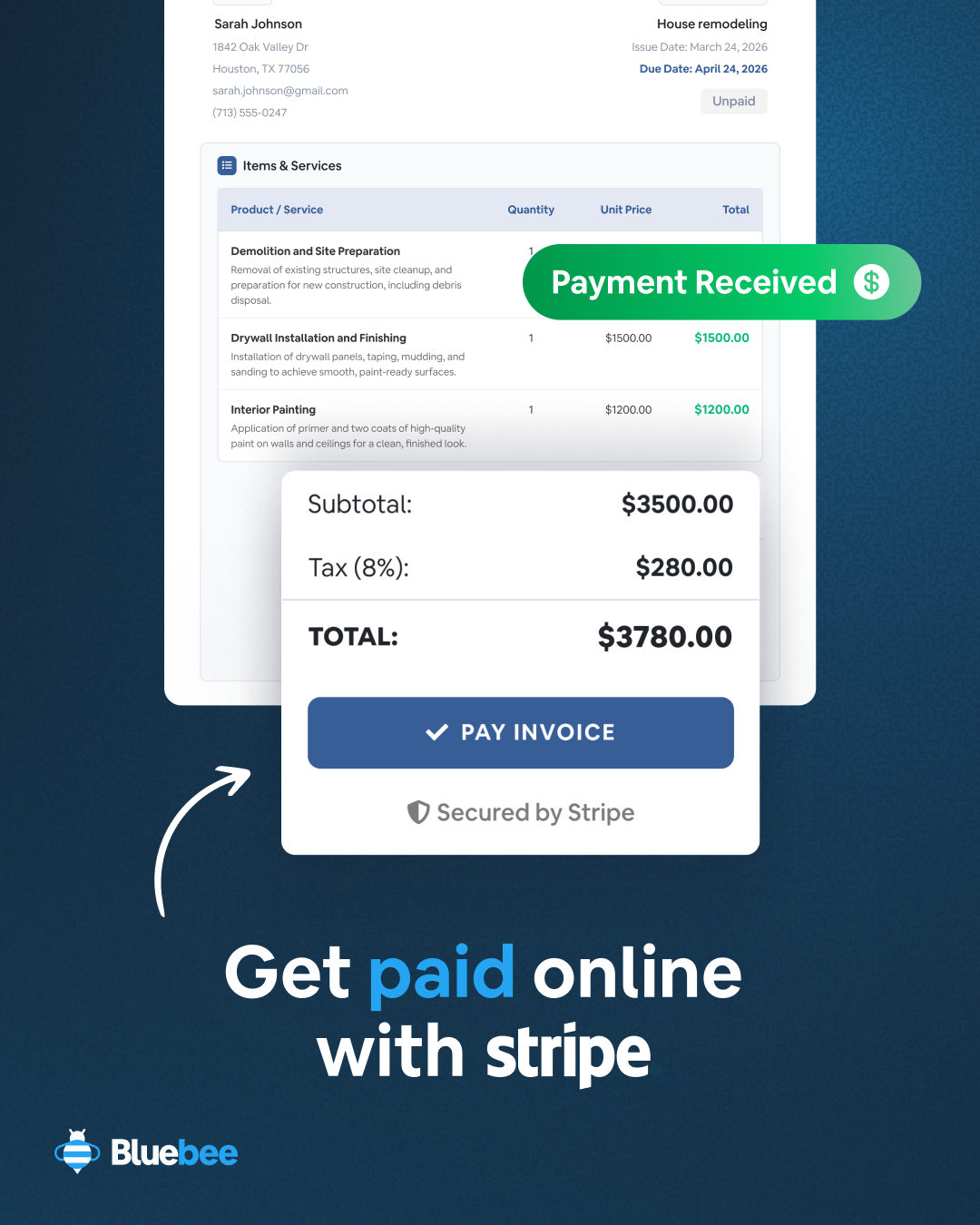
Important: Always send professional estimates and invoices for treatment programs. Clients need to see the schedule, what products are being applied, and the value of each visit.
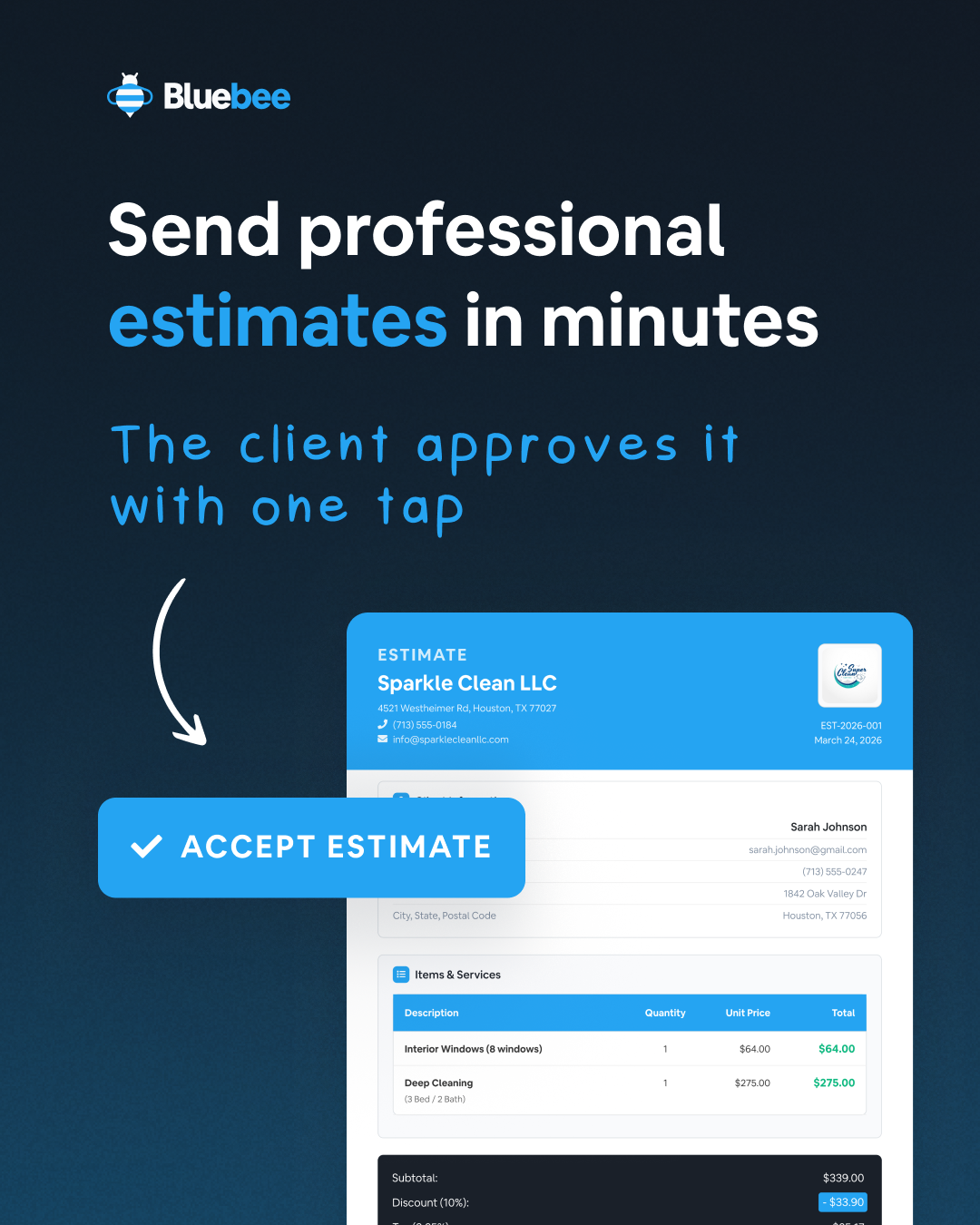
BlueBee App makes it easy to set up recurring service packages. Build your treatment program as a service in your library, create the estimate on-site, and bill monthly or per application. The client gets a professional proposal, you get predictable revenue, and the whole thing is managed from your phone. Free to download on the App Store.
4. Hardscaping (Patios, Walkways, Retaining Walls)
Average job: $3,000-$15,000+ | Margin: 40-55%
Hardscaping is where landscaping becomes truly profitable. A patio installation that uses $2,000 in materials, takes a two-person crew three days, and sells for $8,000-$12,000 is the kind of job that can make your month.
The investment to get started is moderate: a plate compactor ($300-$600 to rent), a masonry saw ($200-$400 to rent), and experience with proper base preparation. Many landscapers learn hardscaping by subbing for an experienced installer for a few months before offering it independently.
The sales approach is simple: when you're mowing a property and notice the old concrete patio or the sloping backyard, mention it. "That slope is actually a great opportunity for a tiered retaining wall with a patio. Would you be interested in a free design consultation?"
5. Irrigation Installation and Repair
Average job: $200-$800 (repair) | $2,500-$6,000 (new system) | Margin: 45-60%
Every property with a lawn has irrigation needs. Sprinkler head replacements, zone repairs, controller upgrades, and winterizations are quick jobs with excellent margins. And full irrigation installations for new construction or renovation projects are high-ticket work.
You're already on the property — you see the dry spots, the broken heads, the water waste. "I noticed your zone 3 heads are throwing water on the sidewalk. I can adjust and replace the two bad heads for $150. It'll save you money on your water bill." Easy upsell, easy profit.
6. Seasonal Cleanups and Leaf Removal
Average job: $250-$600 | Margin: 55-65%
Spring and fall cleanups fill the calendar during the shoulder seasons when mowing frequency drops. They're labor-intensive but high-margin because the overhead is minimal — you're using equipment you already own.
The key to making cleanups profitable: price by the property, not by the hour. A property that takes you 4 hours the first year might only take 2.5 hours the second year because you're familiar with it. Flat-rate pricing rewards your efficiency.
7. Snow and Ice Management (Seasonal Markets)
Average per push: $75-$200 (residential) | $200-$1,000+ (commercial) | Margin: 45-65%
If you're in a market with winters, snow removal is the obvious complement to landscaping. Your truck already has a hitch. A plow blade costs $3,000-$6,000. Salt and de-icer are cheap. And your mowing clients already trust you to take care of their property.
Commercial snow contracts are particularly lucrative: seasonal contracts of $3,000-$15,000+ that guarantee you revenue regardless of snowfall. Office parks, retail centers, and HOAs need reliable snow removal and are willing to pay premium for contractors they trust.
How to Introduce New Services
You don't need to add all seven services at once. Start with the one that matches your current skills and equipment, and add one new service each season:
- Season 1: Add mulching and bed maintenance (minimal new equipment needed)
- Season 2: Add lawn treatments (requires applicator license) or seasonal cleanups
- Season 3: Add landscape lighting or irrigation repair
- Season 4: Add hardscaping or snow removal
Each new service you add increases the lifetime value of every client. A $55/week mowing client who also buys mulching ($400), lawn treatments ($400), spring cleanup ($300), and fall cleanup ($350) is now a $4,250/year client. That's the math that transforms a landscaping business.
The Bottom Line
Mowing is the entry point, not the ceiling. The most successful landscaping businesses use mowing as the relationship builder and upsell higher-margin services to their existing client base. You're already on the property, you already have the trust, and you're already seeing the opportunities. Stop leaving money in the yard and start capturing it. Your clients want a single trusted company that handles everything outdoors — make sure that company is yours.