
Why Landscaping Is the Most Accessible Trade to Start
There's a reason more people start landscaping businesses than almost any other trade: the barrier to entry is incredibly low. You don't need years of apprenticeship, a master's license, or tens of thousands in specialized equipment. A reliable truck, a commercial mower, a trimmer, a blower, and a willingness to work hard is enough to start earning money this week.
But here's the flip side that nobody warns you about: because the barrier to entry is so low, competition is fierce. In any given market, there are dozens — sometimes hundreds — of landscaping companies competing for the same clients. The ones that survive and thrive aren't the ones with the fanciest equipment. They're the ones that run an actual business instead of just mowing lawns.
This guide is about building the second kind.
Step 1: Legal Setup (Don't Skip This)
Most landscaping businesses start informally — a guy with a truck and a mower cutting neighbors' lawns for cash. And most of those never grow beyond that because they skipped the foundation. Here's what you need:
- Business registration: LLC is the standard for landscaping. It costs $50-$300 depending on your state and protects your personal assets if something goes wrong on a job site.
- General liability insurance: $500-$1,500/year. Non-negotiable. One broken window, one sprinkler line cut, one trip-and-fall on a client's property, and you're personally liable without it. Many commercial clients won't hire you without proof of insurance.
- Commercial auto insurance: Your personal auto policy doesn't cover business use. If you're in an accident while pulling a trailer full of equipment, your personal insurance can deny the claim.
- Pesticide/herbicide applicator license: Required in most states if you offer weed control, fertilization, or pest management. Usually requires a short course and exam.
- Business checking account: Separate your personal and business finances from day one. This makes taxes infinitely easier and looks professional when clients write checks.
Step 2: Equipment — Start Lean, Upgrade With Revenue
The biggest mistake new landscaping businesses make is buying $30,000 worth of equipment before they have $30,000 worth of clients. Start with the essentials and upgrade as revenue justifies it.
Essential Starter Kit ($3,000-$8,000)
- Commercial walk-behind mower: $1,500-$3,000 (Honda, Toro, or Husqvarna are reliable choices)
- String trimmer: $200-$400
- Backpack blower: $300-$500
- Hedge trimmer: $200-$400
- Hand tools: Rakes, shovels, pruning shears, wheelbarrow — $300-$500
- Trailer: $800-$2,000 (used single-axle is fine to start)
First Upgrade (When You're Consistently Booked)
- Zero-turn mower: $4,000-$8,000 — cuts mowing time in half on larger properties
- Edger: $300-$500 — cleaner results along sidewalks and driveways
- Enclosed trailer or truck upgrade: Protects equipment from theft and weather
Don't finance equipment until you have consistent monthly revenue to support the payments. Many successful landscaping businesses started with used equipment purchased from Craigslist or Facebook Marketplace.
Step 3: Pricing That Pays the Bills (And Then Some)
Pricing is where most landscaping businesses go wrong. They look at what the other guy charges, undercut him by $5, and wonder why they're working 60 hours a week and barely scraping by.
Here's the reality: you need to charge enough to cover your costs, pay yourself a real wage, and still have profit left over for equipment, growth, and a rainy-day fund. That means knowing your numbers.
How to Calculate Your Hourly Rate
Add up ALL your monthly costs: equipment payments, insurance, fuel, vehicle expenses, marketing, phone, software, supplies. Divide by the number of billable hours you work per month. Add at least 30% on top for profit and future investment. For most solo operators, the minimum sustainable rate is $45-$65 per man-hour. For crews, multiply by headcount.
How to Price Common Services
- Weekly mowing (residential): $35-$75 per visit for standard lots. Price by the property, not by the hour, and get faster over time.
- Mulching: $65-$85 per cubic yard installed
- Spring/fall cleanup: $200-$500+ depending on property size
- Hedge trimming: $50-$75 per hour or flat rate per property
- Landscape installation: Materials + 50-100% markup + labor at your hourly rate
Step 4: Present Like a Business, Not a Side Hustle
The fastest way to separate yourself from the "guy with a truck" competition is to look and act like a legitimate business. This doesn't require a big investment:
- Branded estimates: Stop texting prices. Send itemized estimates with your logo, clear line items, and terms. Clients trust businesses that look organized.
- Professional invoicing: Invoice immediately after every job or at the end of each month for recurring clients. Offer credit card payment to get paid faster.
- Branded truck/trailer: Even magnetic signs ($50-$100) are better than a blank white truck. Your vehicle is a mobile billboard.
- Clean appearance: Matching shirts or branded polos for you and your crew. It costs $15 per shirt and changes how clients perceive you.
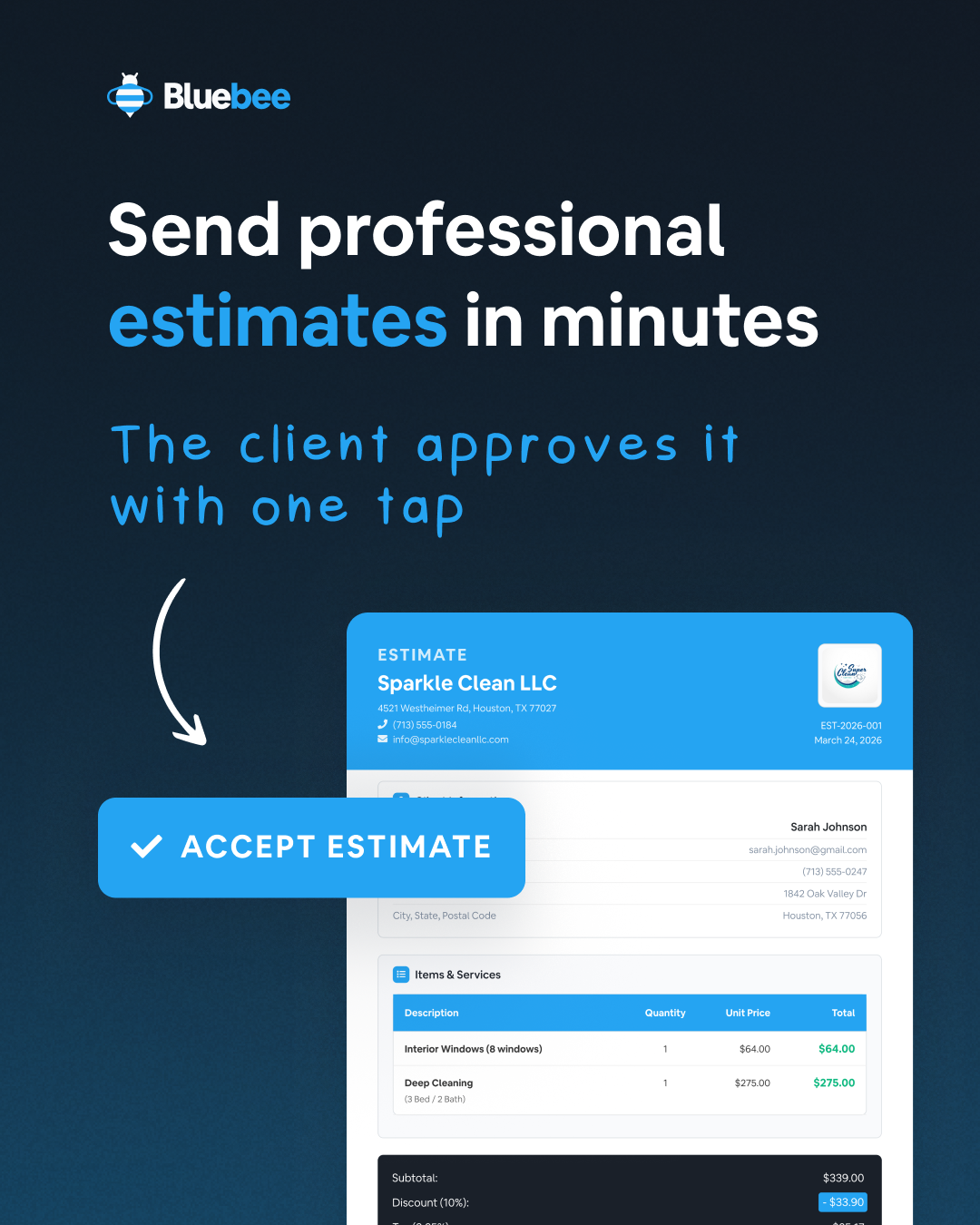
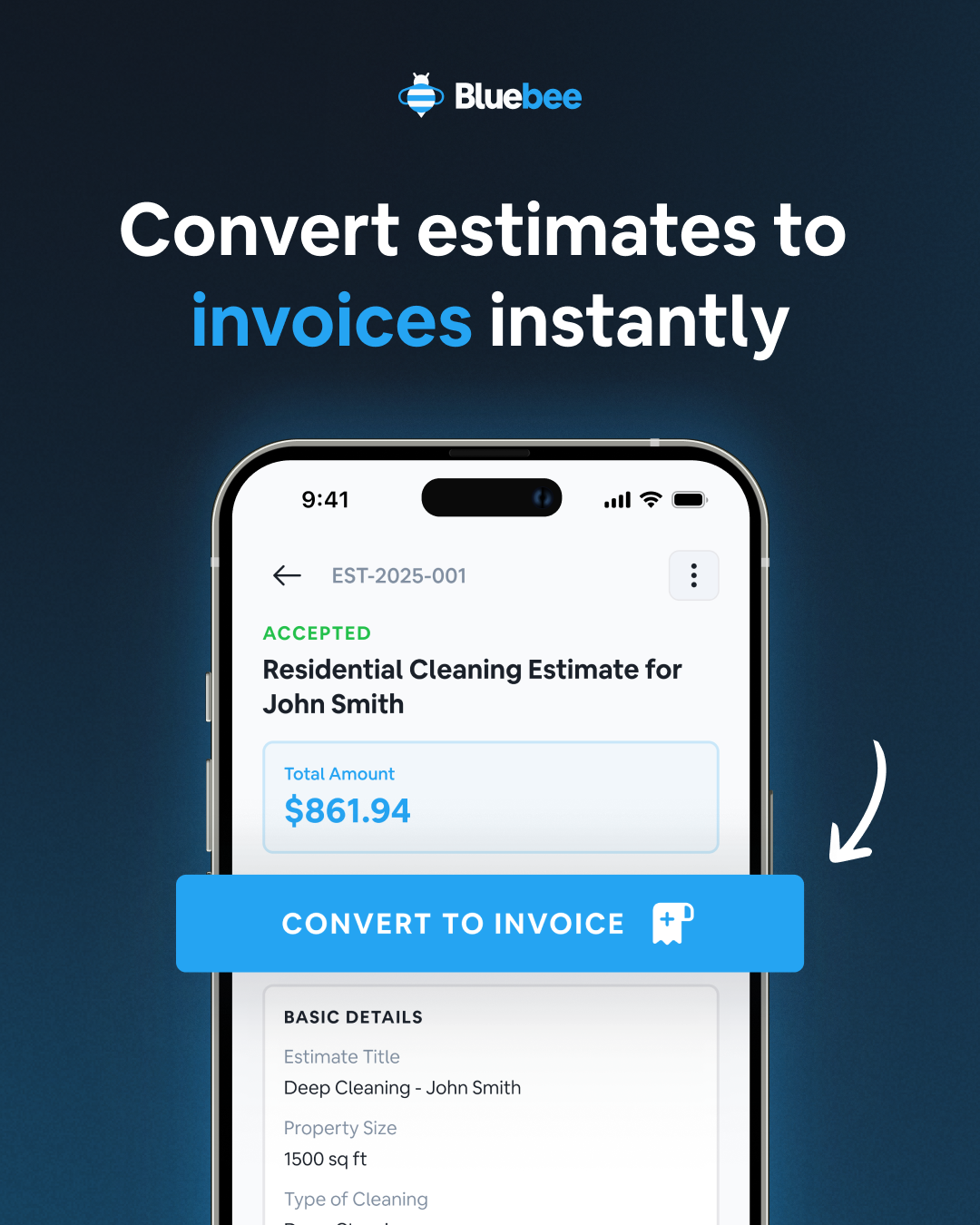
BlueBee App is built for exactly this. You can set up a service library with all your landscaping services (weekly mowing, mulching, cleanups, hedge trimming, landscape installs), create branded estimates from your phone at the job site, and send them instantly. When the client says yes, convert it to an invoice and collect payment by card — no more waiting weeks for checks. The free plan lets you test it, and the $9.99/month Business plan unlocks unlimited estimates, invoices, and online payments. Download it on the App Store.
Step 5: Get Clients Fast
You need clients to survive the first season. Here's the launch playbook that works for landscaping:
- Door-to-door flyers in target neighborhoods: Pick 3-5 neighborhoods where homes are well-maintained (these homeowners already value lawn care). Leave professional flyers or door hangers with a first-service discount.
- Google Business Profile: Set it up immediately with photos of your work, your service area, and your phone number. This is free and is where 60%+ of local searches happen.
- Nextdoor app: Claim your business profile and engage in local conversations. Nextdoor is goldmine for lawn care leads.
- Facebook Marketplace and community groups: Post your services with photos. Don't spam — post once per week and respond to every inquiry within minutes.
- Ask every happy client for a Google review: Reviews are the #1 factor in local search ranking. Ten 5-star reviews will put you ahead of competitors with zero.
Step 6: Build Recurring Revenue
The biggest difference between landscaping businesses that survive and ones that thrive is recurring revenue. One-time jobs keep you on a hamster wheel. Monthly maintenance contracts give you predictable income.
- Weekly or bi-weekly mowing contracts: Lock in clients for the entire season (March-November in most markets). Bill monthly rather than per visit — it smooths your revenue and reduces invoicing work.
- Seasonal packages: Bundle spring cleanup + weekly mowing + fall cleanup at a slight discount. Clients love the simplicity and you love the guaranteed revenue.
- Upsell existing clients: Your mowing clients are your warmest leads for mulching, landscape lighting, irrigation repair, and hardscape work. You're already on their property every week — notice opportunities and mention them.
Step 7: Hire and Scale (When You're Ready)
The transition from solo operator to employer is the hardest step in any landscaping business. Here's when you're ready:
- You're turning down work because you're fully booked
- You have at least 3 months of operating expenses saved
- You have enough recurring revenue to cover a helper's wages even in a slow week
Start with a part-time helper, not a full crew. Pay them well ($16-$22/hour depending on market and experience) and train them to your standards. A good helper should free up enough of your time to sell more work, which covers their cost and then some.
The Bottom Line
Starting a landscaping business is straightforward. Building one that lasts is the challenge. The companies that dominate their local markets aren't doing anything magical — they're licensed, insured, well-equipped, professionally presented, and intentional about getting and keeping clients. Set up the foundation right, price for profit not just survival, and treat every client like they're your marketing department (because they are). The grass is greener on the side of the fence where someone runs a real business.