

Why Most Painting Estimates Lose the Job
Most painting contractors lose more than half their estimates — not because their prices are too high, but because their estimates don't communicate value. A handwritten quote on a blank piece of paper that says "Paint living room and hallway - $1,200" tells the homeowner nothing about what they're getting, why you're worth it, or why they should choose you over the three other painters they called.
The painting contractors who close at 60-70% aren't necessarily the cheapest. They're the ones who conduct professional walkthroughs, explain their process, itemize their proposals, and present estimates that look like they come from a real business. This guide covers every step of that process.
The Pre-Estimate: Qualifying the Lead
Before you drive to a job site, qualify the lead by phone. Five minutes of questions saves you an hour of wasted drive time and walkthrough on jobs that won't close:
- "What are you looking to have painted?" — Interior, exterior, specific rooms, cabinets? This tells you the scope.
- "What's your timeline?" — "Whenever you're available" means they're price shopping. "Before Thanksgiving" means they have urgency.
- "Have you gotten other estimates?" — Not to match their price, but to understand your competition and position.
- "Is there any repair work needed?" — Drywall damage, wood rot, peeling? This affects scope significantly.
- "What's your budget range?" — Not everyone will answer, but those who do save you from writing a $5,000 estimate for someone with a $1,500 budget.
The Walkthrough: Measure Everything
A thorough walkthrough is where professional painters separate from amateurs. Bring a measuring tape, phone (for photos and notes), and a systematic approach:
Interior Walkthrough Checklist
- Room dimensions: Length × width × ceiling height for each room. Calculate total wall square footage: (perimeter × height) minus windows and doors.
- Ceiling condition: Flat, textured, vaulted? Ceilings add 30-50% more time than walls.
- Trim and doors: Count every window frame, door frame, baseboard linear foot, crown molding linear foot, and door (including closet doors).
- Surface condition: Holes, cracks, peeling paint, water stains, wallpaper removal needed? Each repair adds time and materials.
- Current colors vs. new colors: Going from dark to light requires more coats. Going from oil-based to latex requires special primer.
- Furniture: How much needs to be moved? Empty rooms paint 30% faster than furnished ones.
- Floor type: Carpet (easy to protect) vs. hardwood (must be carefully protected) vs. tile.
Exterior Walkthrough Checklist
- Total paintable surface: Measure each wall face. Subtract windows and doors. Add soffits, fascia, and trim.
- Surface material: Wood siding, stucco, brick, vinyl, fiber cement — each paints differently and requires different prep.
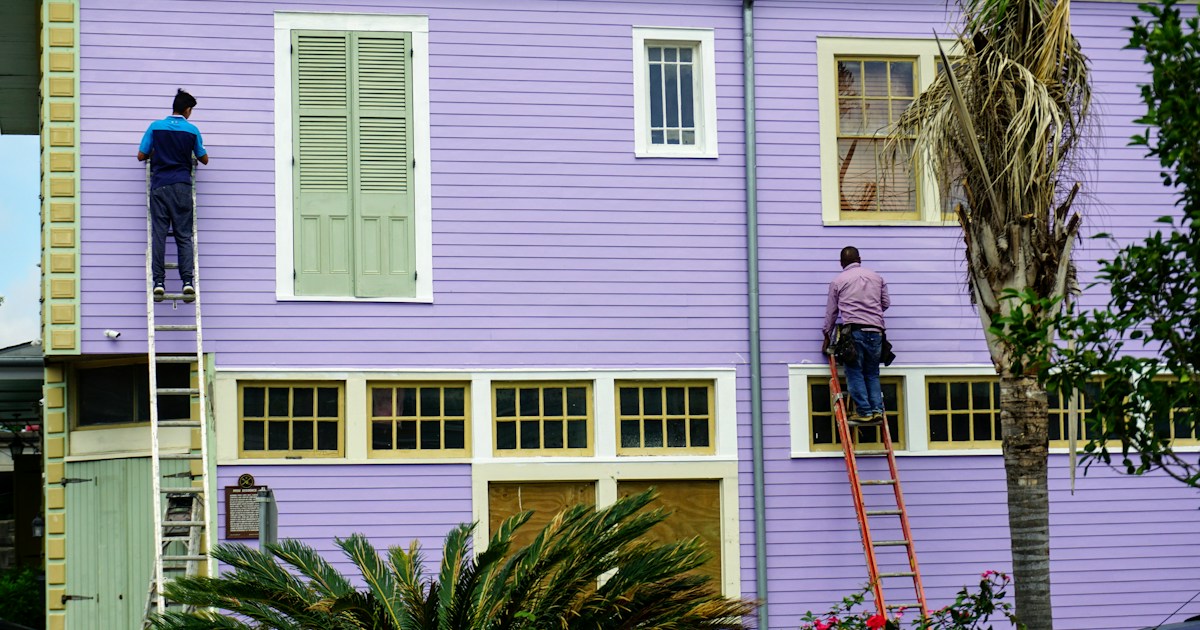
- Height: Two-story vs. single-story dramatically affects time (ladder work is slower and riskier).
- Prep needed: Peeling paint (how much?), wood rot, caulking, pressure washing, scraping?
- Obstacles: Landscaping close to the house, deck, fencing — anything that makes access difficult.
The Pricing Formula: How to Calculate Your Numbers
Every profitable estimate starts with the same formula:
Total Price = Materials + Labor + Overhead + Profit
Materials Calculation
- Paint: One gallon covers approximately 350-400 sq ft per coat. Most jobs need 2 coats. Calculate total gallons needed, multiply by paint cost ($35-$65/gallon for contractor-grade).
- Primer: Required for new drywall, stain blocking, color changes, and over repairs. Similar coverage to paint.
- Supplies: Caulk, painter's tape, plastic sheeting, sandpaper, patching compound. Budget $50-$150 per job.
- Markup: Add 30-50% markup on materials. You're buying them, transporting them, and managing inventory — that has value.
Labor Calculation
Production rates for an experienced painter:
- Interior walls: 150-200 sq ft per hour (2 coats, including cut-in)
- Ceilings: 100-150 sq ft per hour
- Trim/baseboard: 50-80 linear feet per hour
- Doors: 30-45 minutes per door (both sides)
- Prep work: Varies widely — 1-3 hours per room for standard prep, significantly more for damaged surfaces
- Exterior: 100-150 sq ft per hour (brush/roller), 300-500 sq ft per hour (spray)
Multiply total hours by your labor rate. Solo painters: use your target hourly income ($50-$85/hour). With employees: use their hourly cost × 1.3 (for taxes and benefits) plus your supervision time.

The fastest way to build accurate painting estimates on-site is with a dedicated estimating app. BlueBee App lets you save your painting services as a price list — interior room, exterior siding per sq ft, cabinet refinishing, deck staining — and build itemized estimates in minutes during the walkthrough. Send it to the client before you leave the driveway. When they approve, convert to invoice and collect payment by card. No laptop, no spreadsheets, no delays. Free on the App Store.
Presenting the Estimate: How You Show It Matters
The format of your estimate is almost as important as the price. A professional estimate should include:
- Your company branding: Logo, company name, contact info, license numbers, insurance info.
- Client information: Name, address, phone, email.
- Detailed scope of work: Don't just say "paint interior." List every room, what's being painted (walls, ceiling, trim, doors), number of coats, and color selections.
- Preparation included: Washing, scraping, sanding, patching, caulking, priming — list it all. This is where you justify your price over cheaper competitors who skip prep.
- Materials specified: Paint brand and product line (e.g., "Sherwin-Williams Duration, satin finish"). This shows quality commitment.
- Protection plan: How you'll protect floors, furniture, landscaping, and fixtures.
- Timeline: Start date, estimated duration, working hours.
- Warranty: What you guarantee and for how long (industry standard: 2-3 years on workmanship).
- Price: Itemized by area or as a total. Include payment terms (deposit amount, progress payments, final payment).
- Expiration date: Estimates valid for 30 days creates urgency.
Pricing Psychology: Techniques That Close More Jobs
The Three-Tier Approach
Offer three options when appropriate:
- Basic: Standard prep, contractor-grade paint, 2 coats walls only — $2,800
- Standard: Thorough prep, premium paint, 2 coats walls + ceilings, trim touch-up — $4,200
- Premium: Complete prep, top-line paint, 2 coats everything, trim repainted, accent wall, furniture moved — $5,800
Most clients choose the middle option. You've anchored the high price and made the middle feel reasonable. The basic option exists to make the standard look like good value.
Speed Wins
The first professional estimate to arrive wins the job over 50% of the time. If you can walk the job and send a detailed estimate within 2 hours, you're ahead of 90% of competitors. Most painters take 3-7 days to send estimates — that delay kills deals.
Follow Up or Lose
If the client doesn't respond within 48 hours, follow up with a simple text or call. "Hi [Name], just checking if you had any questions about the estimate I sent for your living room project." 30% of painting jobs are won on the follow-up, not the initial estimate.
Common Estimating Mistakes to Avoid
- Underestimating prep time: The #1 profit killer. Old houses, peeling paint, multiple layers, and texture take significantly more time than fresh drywall. When in doubt, add 20% to your prep estimate.
- Not accounting for coats: Dark to light requires 3-4 coats. Deep reds and yellows require tinted primer. Factor this into your materials and labor.
- Forgetting small tasks: Moving furniture, masking light fixtures, removing outlet covers, painting behind appliances — these add up to hours.
- Pricing by the room instead of measuring: A "room" can be 100 sq ft or 400 sq ft. Always measure and price by square footage.
- Not charging for color changes: When clients change colors mid-job, that's additional coats and materials. Include a change order clause in your estimate.

The Bottom Line
Your estimate is your sales pitch, your contract, and your profit plan all in one document. Conduct thorough walkthroughs, measure everything, price for profit (not survival), present professionally with detailed scope, and follow up consistently. The painters who master the estimating process don't just win more jobs — they win more profitable jobs from better clients who value quality over the lowest price.