
Why Roofing Is One of the Highest-Revenue Trades
Roofing sits in a unique position among the trades: the average job ticket is $8,000-$15,000 (compared to $2,000-$5,000 for most residential trades), demand is constant and spikes dramatically after storms, and the work — while physically demanding — follows a repeatable process that scales well with crews.
The U.S. roofing market exceeds $56 billion annually and is projected to grow 4-5% per year through 2030. An experienced roofing contractor running two crews can realistically generate $500,000-$1,500,000+ in annual revenue with 25-40% gross margins. That math makes roofing one of the most attractive trades for ambitious business owners.
But roofing also has higher barriers to entry than some trades — significant insurance costs, equipment investment, and physical risk. This guide walks you through every step of building a roofing business that's profitable, sustainable, and positioned for growth.
Step 1: Licensing and Legal Requirements
Roofing licensing requirements vary significantly by state:
- State contractor's license: Many states (California, Florida, Arizona, etc.) require a specific roofing contractor's license with a written exam. Others require a general contractor's license. Some states (like Texas) have no state license but require registration.
- Local permits: Most jurisdictions require permits for roof replacements. You'll need to understand your local permit process — pulling permits is part of professional roofing work.
- EPA Lead-Safe Certification: Required if working on buildings built before 1978 that involve disturbing painted surfaces (common during tear-offs).
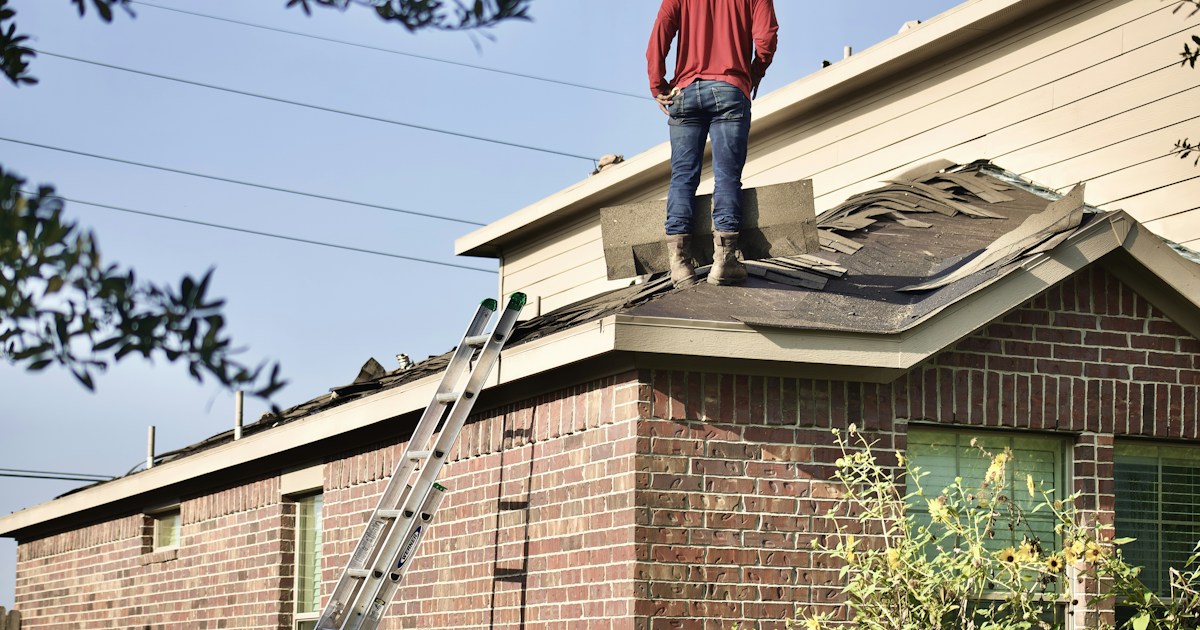
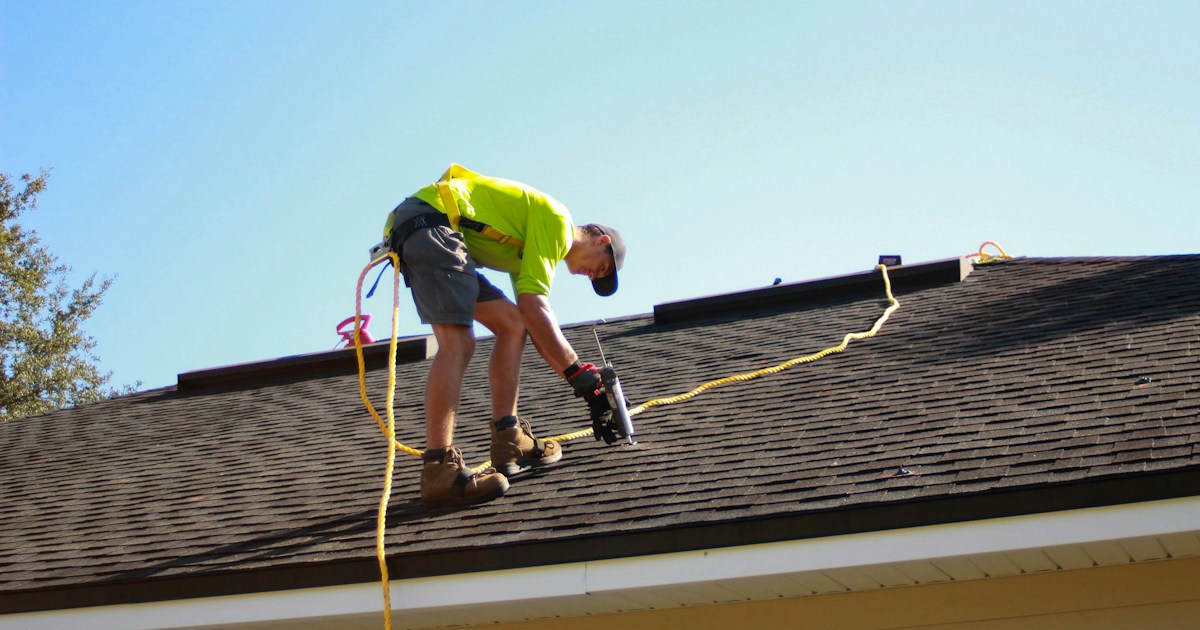
- OSHA compliance: Roofing has the highest fatality rate of any construction trade. OSHA requires fall protection for any work at heights above 6 feet — harnesses, guardrails, or safety nets. Non-compliance can result in fines of $15,625-$156,259 per violation.
Business Structure
- LLC or S-Corp: An LLC is the minimum for liability protection. Transition to S-Corp when net profits exceed $60,000-$80,000 for tax savings.
- EIN: Required for hiring, taxes, and business banking.
- Business bank account: Absolutely essential — roofing jobs involve large payments that must be tracked properly.
Step 2: Insurance — Your Most Critical Investment
Roofing insurance is expensive because the risk is high. But operating without proper insurance is a business-ending mistake — one fall, one storm damage claim, or one property damage incident can bankrupt an uninsured contractor.
- General liability: $1M-$2M coverage. Expect $3,000-$8,000/year depending on your state and revenue. This covers property damage and third-party injuries.
- Workers' compensation: Required in most states once you hire. Roofing has the highest workers' comp rates of any trade — typically 20-40% of payroll. For a crew of 4 earning $40,000-$50,000 each, that's $32,000-$80,000/year. This is your single largest overhead cost.
- Commercial auto: $2,000-$5,000/year for trucks and trailers.
- Surety bond: Required in many states, typically $10,000-$25,000.
- Umbrella policy: Additional coverage above your base policies, $1,000-$3,000/year for $1M-$2M additional coverage.
Total insurance cost: $40,000-$100,000/year for a small roofing operation with 4-6 employees. This is why roofing contractors must maintain strong margins — the overhead is real.
Step 3: Equipment and Startup Costs
Essential Equipment ($15,000-$40,000)
- Pneumatic nail guns: Roofing nailers (Bostitch, DeWalt, MAX) — $300-$500 each, need 3-4 for a crew
- Air compressor: Portable gas-powered compressor for roof work — $800-$1,500
- Tear-off tools: Shingle removers, flat bars, shovels — $200-$400
- Safety equipment: Harnesses, rope grabs, roof anchors, lanyards for entire crew — $1,000-$2,000
- Ladders: Extension ladders (28-40 ft), ladder stabilizers — $500-$1,000
- Dump trailer: For hauling tear-off debris — $5,000-$10,000 (or rent dumpsters per job at $350-$600)
- Work truck: Heavy-duty pickup (F-250/F-350 or equivalent) — $25,000-$45,000 used
- Material delivery: Most suppliers deliver shingles to the roof via boom truck — no need to buy your own
Total realistic startup: $50,000-$120,000 including vehicle, trailer, equipment, insurance, and working capital for first material purchases.
Step 4: Pricing Roofing Jobs for Profit
Roofing pricing is based on "squares" — one roofing square equals 100 square feet of roof area. A typical residential roof is 20-35 squares.
2026 Pricing Benchmarks
- Asphalt shingle tear-off and replacement: $350-$550 per square (installed). A 25-square roof = $8,750-$13,750.
- Architectural shingle overlay: $250-$400 per square (no tear-off). Lower cost but not always advisable.
- Metal roofing: $600-$1,200 per square. Higher material cost but premium pricing and growing demand.
- Flat/low-slope roofing (TPO, EPDM): $400-$800 per square. Commercial and residential.
- Roof repairs: $300-$1,500 per repair. High margin but smaller ticket.
- Gutter installation: $8-$15 per linear foot. Excellent add-on service.
Target margins: 35-50% gross profit. Materials typically run 30-40% of the job cost, labor 25-35%, and the rest covers overhead and profit.
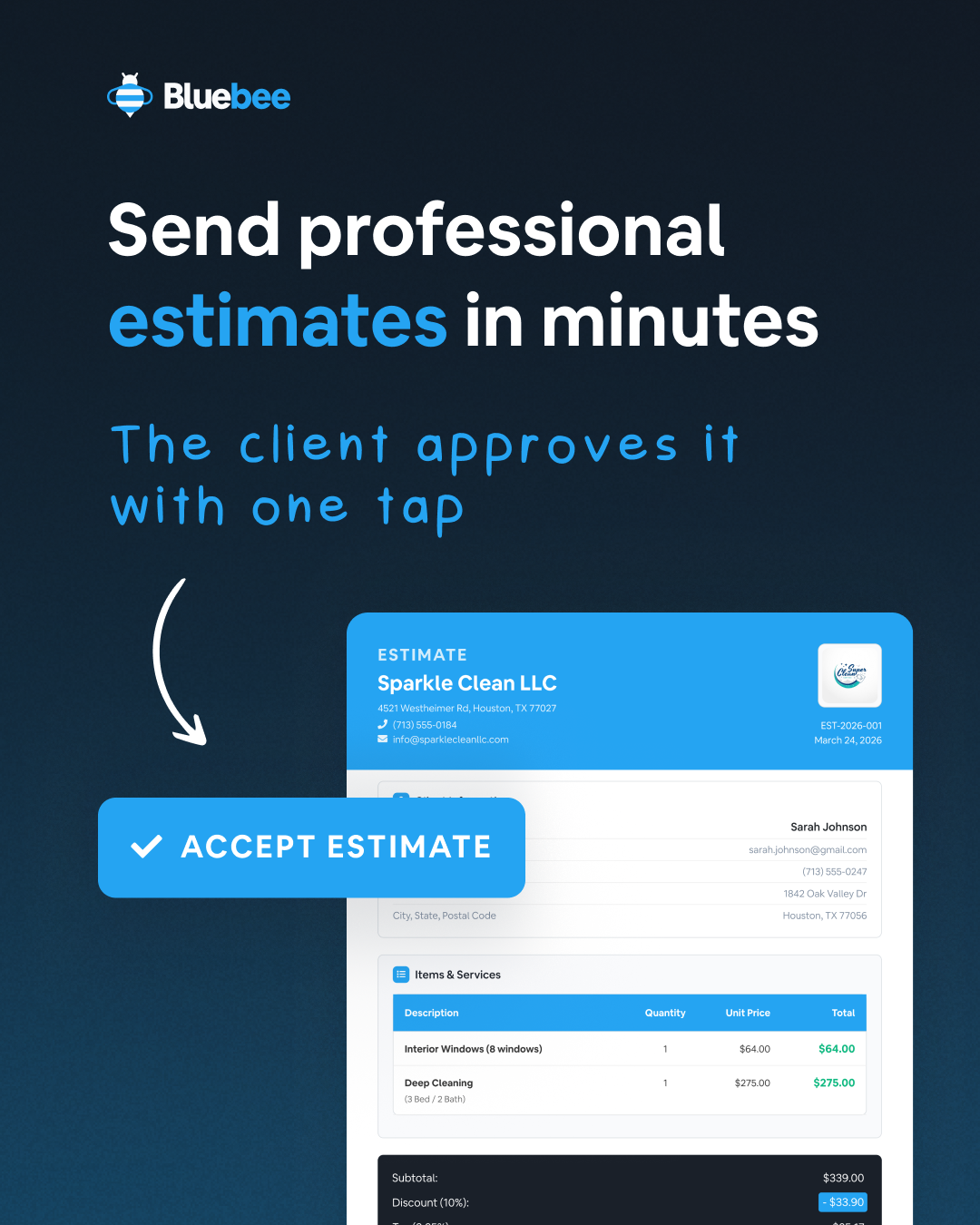
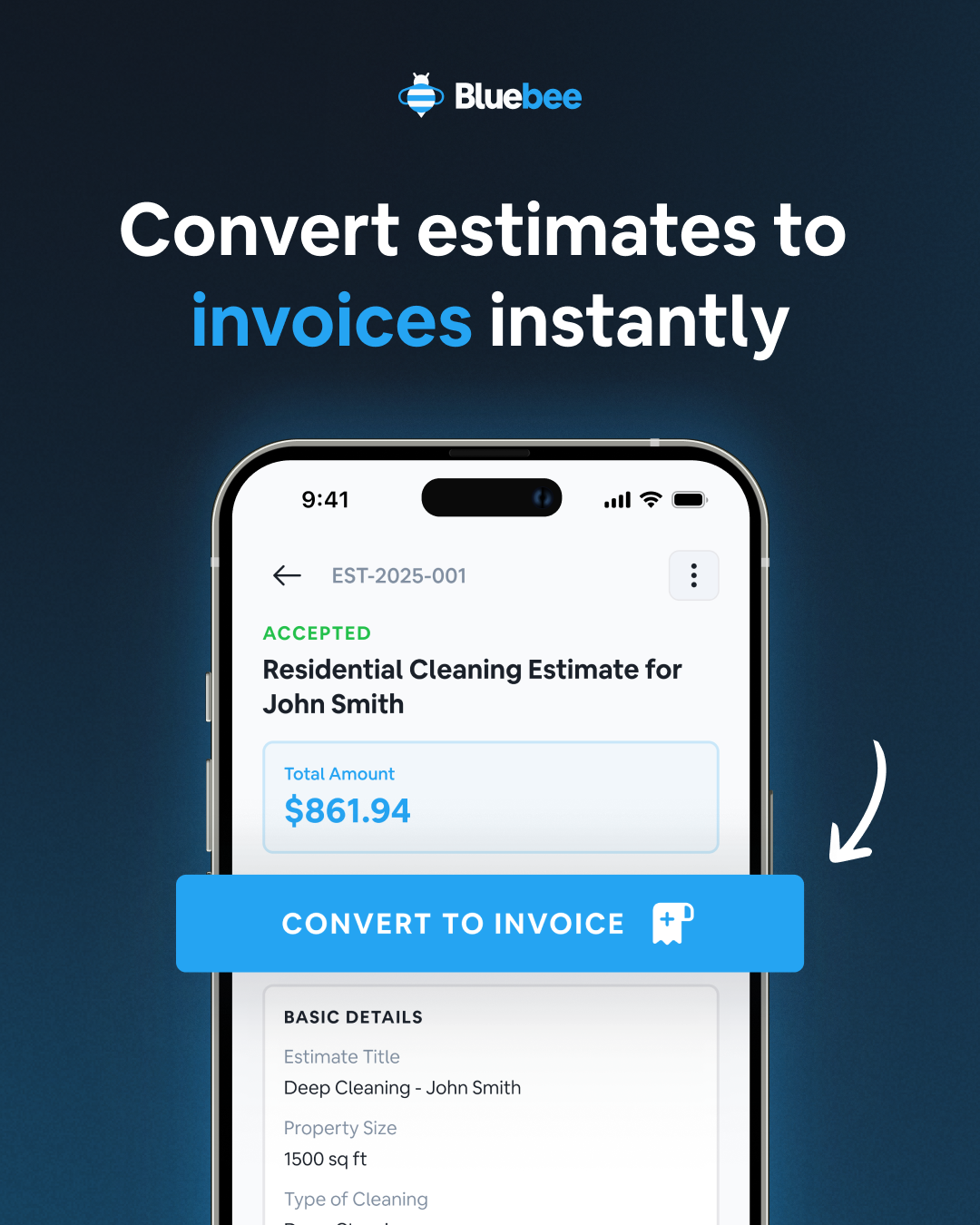
Roofing estimates need to look as solid as your work. Homeowners making an $8,000-$15,000 decision want a detailed, professional proposal — not a verbal quote. BlueBee App lets you build roofing estimates from your phone right at the inspection — itemize tear-off, underlayment, shingles, flashing, vents, cleanup, and warranty. Send it branded with your company info before you leave. When approved, convert to invoice and collect the deposit by card. Download free on the App Store.
Step 5: Building Your Crew
Roofing is crew-based work — you can't efficiently roof a house solo. Building a reliable crew is one of the biggest challenges in roofing.
- Crew size: A standard residential crew is 4-6 people. A 25-square tear-off and re-roof should take one day with an experienced crew of 5.
- Pay structure: Most roofing laborers earn $15-$22/hour, experienced roofers $22-$35/hour. Some companies pay per square ($25-$50/square per worker) to incentivize speed.
- Crew lead: Your most experienced person who manages on-site quality and safety. Pay premium — $28-$40/hour or salary. A good crew lead lets you run multiple jobs simultaneously.
- Finding labor: Roofing labor is in high demand. Recruit through word of mouth, local trade schools, and by treating your current crew well. High pay, consistent work, and fair treatment retain good roofers.
Step 6: Getting Roofing Clients
- Storm chasing (ethically): After hailstorms, windstorms, or hurricanes, homeowners need roof inspections and insurance claims. Door-knocking affected neighborhoods with a professional inspection offer is the #1 lead generator for many roofing companies. Do this ethically — offer honest assessments, don't manufacture damage.
- Google Business Profile + Local SEO: "Roofing contractor near me" is one of the highest-intent local searches. A complete profile with photos, reviews, and service area targeting generates steady leads.
- Insurance restoration work: Learn the insurance claims process. Help homeowners file claims, meet with adjusters, and handle the paperwork. This positions you as a partner, not just a vendor, and closes deals at full replacement value.
- Realtor and inspector referrals: Home inspections always check the roof. Build relationships with inspectors and agents who can refer homeowners needing roof work before closing.
- Google Local Service Ads: Pay-per-lead ads for "roofer near me" searches. Higher cost per lead than other trades ($50-$150) but the job values justify it.
Step 7: Scale with Systems
- Standardized inspection process: Use a checklist and photo documentation for every roof inspection. This builds trust and creates a paper trail.
- Estimate-to-close workflow: Inspect → estimate → present → follow up → sign → schedule → order materials → execute → final walkthrough → collect payment. Systematize every step.
- Material ordering: Build relationships with suppliers (ABC Supply, SRS, Beacon) for contractor pricing and credit terms. Material costs are 30-40% of every job — good supplier relationships protect your margins.
- Digital invoicing and payments: Collect deposits before material ordering and final payment upon completion. BlueBee App handles estimates, invoicing, and card payments — essential for managing the cash flow of $8,000-$15,000 jobs.
- Warranty tracking: Offer manufacturer warranties (GAF, Owens Corning, CertainTeed) plus your own workmanship warranty. Becoming a certified installer for a major manufacturer adds credibility and access to better warranty programs.
The Bottom Line
Roofing is a high-revenue, high-risk, high-reward trade. The average job tickets are larger than most residential trades, demand is constant (and spikes after storms), and experienced contractors build very profitable businesses. The barriers — insurance costs, safety requirements, crew management — keep out casual competitors. If you invest in proper licensing, insurance, safety, and professional presentation, roofing offers one of the strongest paths to a six- or seven-figure trade business.