
Why Roofing Estimates Require Precision
A roofing estimate isn't like quoting a paint job or a faucet repair. You're asking a homeowner to spend $8,000-$20,000+ on something they can't see from the ground, don't fully understand, and probably haven't budgeted for. Your estimate needs to educate, build trust, and justify the investment — all while being accurate enough to protect your margins.
Underestimate and you lose money. Overestimate and you lose the job. The roofing contractors who consistently close at 40-60% have a systematic approach: thorough inspection, precise measurement, smart pricing, and professional presentation. Here's how to build that system.
The Roof Inspection: Do It Right Every Time
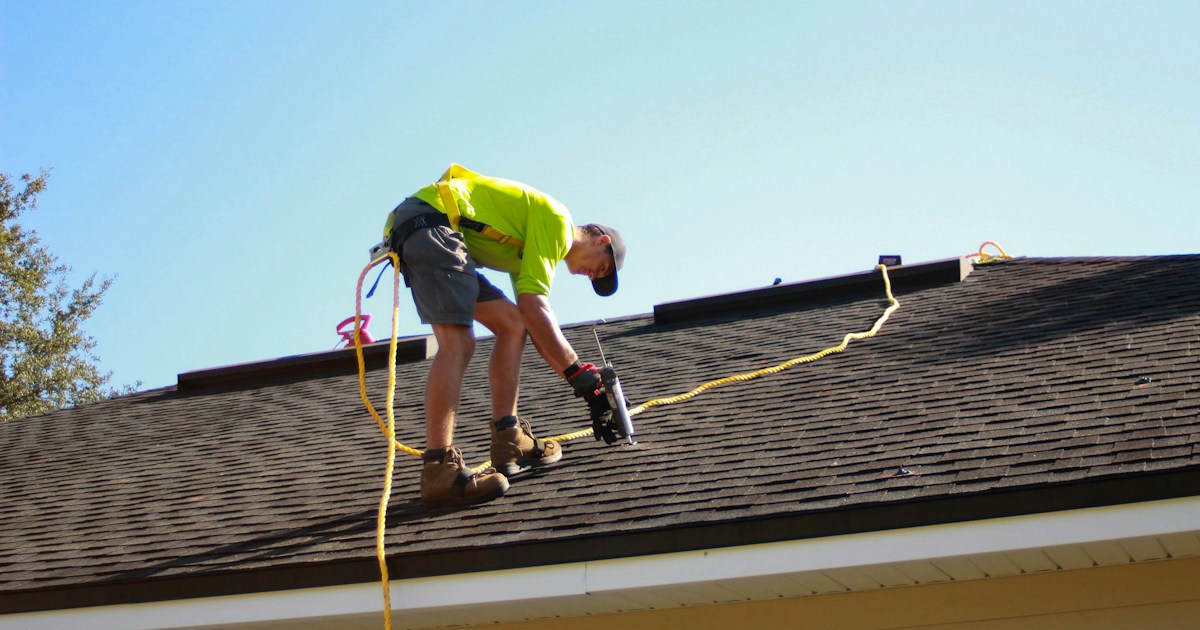
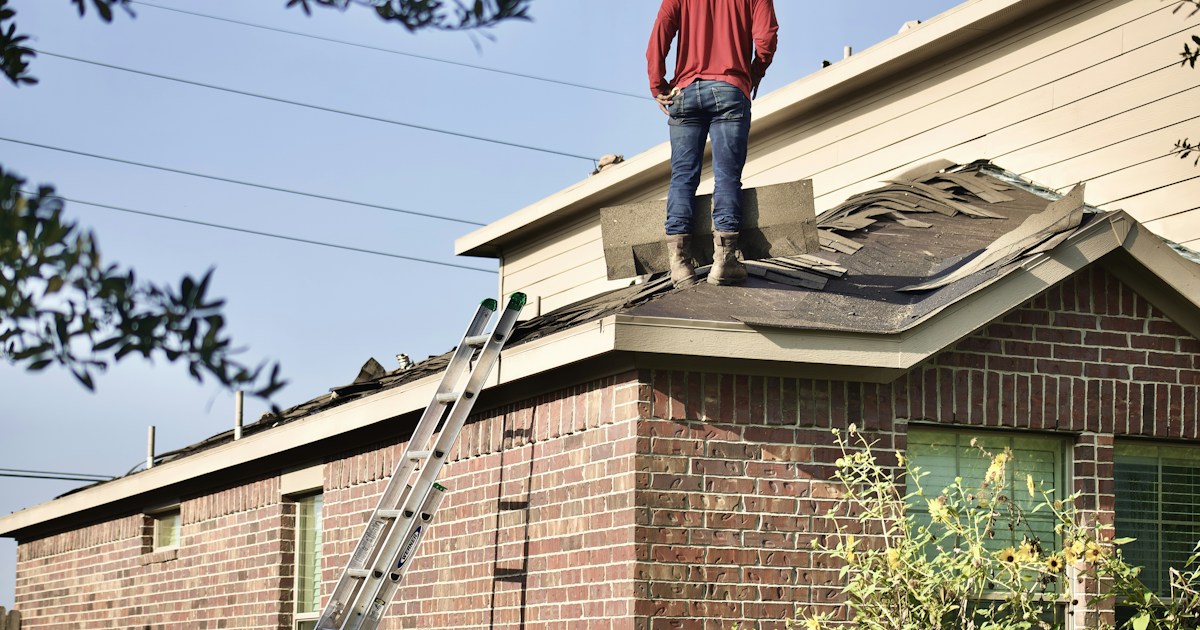
Every roofing estimate starts with a physical inspection. Never quote from the ground or from satellite imagery alone — you need to get on the roof (or use a drone) to assess the actual conditions.
Inspection Checklist
- Shingle condition: Curling, cracking, missing granules, blistering, moss/algae growth. Document with photos.
- Missing or damaged shingles: Count and photograph every area of damage.
- Flashing condition: Check around chimneys, vents, skylights, valleys, and wall transitions. Flashing failures cause most roof leaks.
- Decking condition: Walk the roof and feel for soft spots — soft decking means plywood replacement ($75-$150 per sheet installed). This is the biggest variable cost.
- Number of existing layers: Most codes allow a maximum of 2 layers. If there are already 2 layers, tear-off is required (adds cost). If there's 1 layer, overlay may be possible (reduces cost).
- Ventilation: Check ridge vents, soffit vents, attic fans. Proper ventilation extends roof life — recommend upgrades when needed.
- Gutters and drip edge: Assess condition and include replacement if needed.
- Access and obstacles: Height (stories), steepness (pitch), trees close to the house, power lines, fence gates for material delivery.
- Interior inspection: Check the attic for daylight penetration, water stains, mold, and insulation condition.
Measuring the Roof
Accurate measurement is the foundation of profitable estimates. You have three options:
- Physical measurement: Measure each roof face from on the roof. Most accurate but time-consuming.
- Satellite measurement tools: EagleView, RoofScope, or GAF QuickMeasure provide detailed measurements from aerial imagery. Cost $15-$50 per report but save hours of on-roof measuring. Accuracy: within 2-5%.
- Ground measurement + pitch factor: Measure the building footprint from the ground, determine the pitch (use a pitch gauge or app), then multiply by the pitch factor to get actual roof area. Fast but less precise for complex roofs.
Pitch Factors (Multiply footprint area by this number)
- 4/12 pitch: 1.054
- 5/12 pitch: 1.083
- 6/12 pitch: 1.118
- 7/12 pitch: 1.158
- 8/12 pitch: 1.202
- 10/12 pitch: 1.302
- 12/12 pitch: 1.414
Example: A 1,500 sq ft footprint with a 6/12 pitch = 1,500 × 1.118 = 1,677 sq ft of roof area = 16.77 squares. Round up to 17 squares, then add 10-15% for waste = 19-20 squares of material.
The Pricing Formula
Total Price = (Materials + Labor + Waste + Dump Fees + Overhead) × Profit Margin
Materials Cost per Square (Asphalt Shingles)
- Shingles: $90-$130 per square (3-tab) or $100-$180 per square (architectural/dimensional)
- Underlayment: $15-$25 per square (synthetic felt)
- Ice and water shield: $50-$75 per roll (for eaves, valleys, penetrations)
- Flashing: $50-$200 total depending on complexity
- Ridge cap: $30-$50 per bundle
- Drip edge: $2-$4 per linear foot
- Nails and fasteners: $15-$25 per square
- Ridge vent: $3-$5 per linear foot
Total materials per square: $150-$280 depending on shingle grade and accessories.
Labor Cost per Square
- Tear-off: $50-$100 per square
- Installation: $60-$120 per square
- Steep pitch (8/12+): Add 20-40% to labor
- Second story: Add 10-20% to labor
- Complex roof (many hips, valleys, dormers): Add 15-30% to labor
Additional Costs
- Dumpster rental: $350-$600 per job
- Permit: $100-$500 depending on jurisdiction
- Decking replacement: $75-$150 per sheet (price separately — this varies job to job)
- Waste factor: 10-15% above measured area for cuts and waste
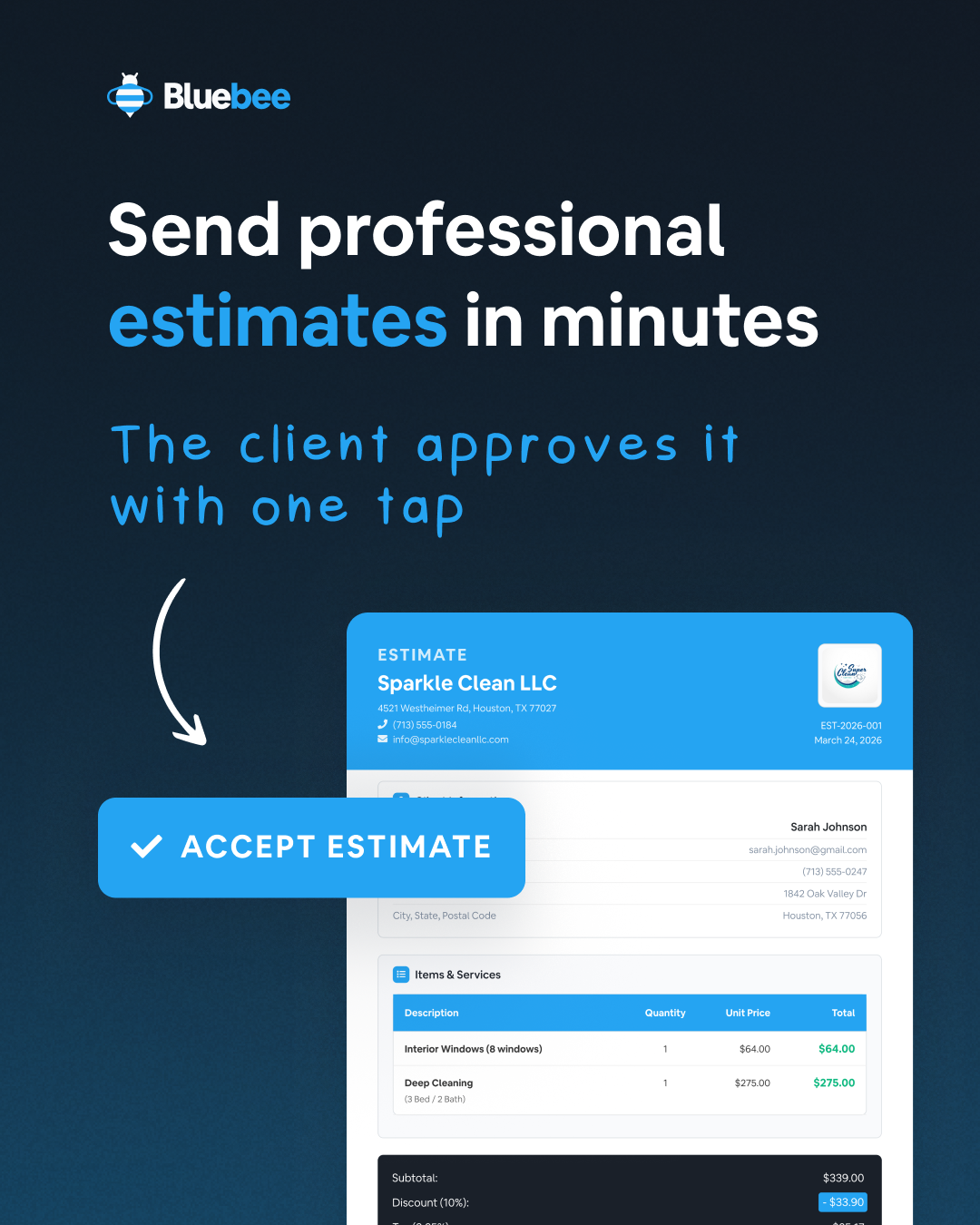
Building a roofing estimate with all these line items used to mean hours with a spreadsheet. BlueBee App changes that — save your standard roofing services and materials as templates, then build accurate estimates in minutes from your phone right after the inspection. Itemize tear-off, materials, labor, waste, and warranties. Send it to the homeowner before you leave the neighborhood. The first professional estimate to arrive wins over 50% of the time. Free on the App Store.
Presenting the Roofing Estimate
A roofing proposal should include:
- Inspection report with photos: Show the homeowner exactly what you found. Before/after of damage, close-ups of problem areas. This educates them and justifies the work.
- Scope of work: Full tear-off or overlay, number of layers removed, underlayment type, shingle brand and color, flashing replacement, ventilation upgrades.
- Materials specified: Brand, product line, color. "Owens Corning Duration, Brownwood" is better than "architectural shingles."
- Warranty details: Manufacturer warranty (25-50 year) plus your workmanship warranty (5-10 year). Becoming a certified installer (GAF Master Elite, Owens Corning Platinum) offers enhanced warranties that differentiate you from competitors.
- Timeline: Start date, expected duration (most residential re-roofs take 1-3 days), and weather contingency.
- Payment terms: Typical: 30-50% deposit at signing, balance upon completion. Never collect 100% upfront — it's a red flag for homeowners and some states prohibit it.
- Insurance and licensing: Include your license number, insurance certificate, and bond information. For insurance claims, include the claim number and adjuster contact.
Insurance Claims: The Roofing Revenue Multiplier
Understanding insurance claims can double your roofing revenue. When storm damage is involved:
- Free inspections: Offer free storm damage inspections to homeowners in affected areas. If damage is found, help them file a claim.
- Meet the adjuster: Be present when the insurance adjuster inspects the roof. Point out all damage — adjusters miss items frequently. Your presence can increase the claim value by 20-40%.
- Supplement the claim: If the initial claim doesn't cover necessary work (code upgrades, additional damage found during tear-off), file a supplement with documentation. Many contractors leave thousands on the table by not supplementing.
- Price to Xactimate: Insurance companies use Xactimate pricing software. Learn these rates — they're often higher than your standard pricing. Legitimate contractors can and should charge full Xactimate rates for insurance work.
Common Estimating Mistakes
- Not inspecting the decking: Rotten decking discovered during tear-off is the #1 budget buster. Always check and include a per-sheet price for replacement in your estimate.
- Ignoring pitch and complexity: A 25-square roof at 10/12 pitch with 6 dormers takes twice as long as a 25-square ranch at 4/12. Price accordingly.
- Underestimating waste: Complex roofs with many hips, valleys, and cuts generate 15-20% waste. Simple gable roofs generate 10%. Budget for it.
- Not pricing extras: Pipe boots, satellite dish relocation, gutter re-hanging, chimney cricket installation — these add up. Include everything.
- Quoting over the phone: Never give a price without inspecting the roof. "I'd be happy to schedule a free inspection" is always the right answer to "How much for a new roof?"

The Bottom Line
Roofing estimates are high-stakes documents — you're asking homeowners to trust you with $10,000+ and the protection of everything they own. Thorough inspections, precise measurements, detailed proposals, and professional presentation are non-negotiable. Master the pricing formula, learn the insurance claims process, and present your estimates faster and more professionally than your competition. The contractor who combines accuracy, speed, and trust wins the roof.