
Why Plumbing Is One of the Best Trades to Start a Business In
The numbers don't lie: the U.S. Bureau of Labor Statistics projects a 6% growth in plumbing jobs through 2032, and the average master plumber earns over $65,000 per year as an employee. As a business owner? The ceiling is dramatically higher. Successful one-truck plumbing operations routinely gross $200,000-$400,000 annually, and multi-truck companies can cross seven figures.
But here's the part nobody talks about: for every plumber who builds a thriving business, three others go back to working for someone else within two years. The difference isn't skill — it's business fundamentals. The plumber who knows how to price jobs, present professionally, manage cash flow, and market their services is the one who makes it.
This guide covers everything you need to know to launch a plumbing business that actually lasts.
Step 1: Get Licensed and Legal
Plumbing is one of the most regulated trades, and for good reason — bad plumbing causes flooding, sewage backups, and health hazards. Every state has its own licensing requirements, but here's the general path:
- Journeyman License: Most states require 4-5 years of apprenticeship under a licensed plumber, plus passing a written exam. This lets you work independently but not pull permits in your name.
- Master Plumber License: Typically requires 2-3 additional years as a journeyman, plus a master's exam. This is the license you need to own a plumbing business and pull permits in most states.
- Contractor's License: Some states require a separate business/contractor license on top of your plumbing license.
- Business Registration: LLC is the most common structure for plumbing companies. It protects your personal assets and looks professional to clients.
Don't skip any of these. Operating without proper licensing is illegal in most jurisdictions and can result in fines of $10,000 or more. More importantly, it disqualifies you from insurance coverage and makes you personally liable for any damages.
Step 2: Nail Your Startup Costs
One of the biggest advantages of starting a plumbing business is the relatively low startup cost compared to other trades. Here's a realistic budget:
- Basic tools and equipment: $3,000-$8,000 (pipe wrenches, cutters, threading tools, drain cleaning equipment, soldering kit, inspection camera)
- Work vehicle: $15,000-$35,000 (used cargo van or service truck)
- Insurance: $2,000-$5,000/year (general liability + commercial auto)
- Licensing fees: $200-$1,000 depending on your state
- Marketing basics: $500-$2,000 (Google Business Profile, basic website, business cards, vehicle magnets)
- Operating capital: $5,000-$10,000 (parts inventory, fuel, expenses for first 2-3 months)
Total realistic startup: $25,000-$60,000
Many successful plumbing businesses started with less than $30,000 by buying a used van, starting with essential tools, and reinvesting profits into additional equipment as jobs demanded it.
Step 3: Set Up Your Pricing
Pricing is where most new plumbing business owners struggle the most. You know you're skilled, but you don't want to "price yourself out of the market." Here's the reality: you're probably undercharging.
There are two main pricing models for plumbing:
Flat-Rate Pricing (Recommended)
Charge a set price for each type of service. Clients love it because they know exactly what they'll pay. You love it because faster work means higher hourly earnings. Build a price book with your 20-30 most common services: faucet replacement, water heater installation, drain clearing, toilet repair, garbage disposal install, etc.
Hourly + Materials
Charge an hourly rate ($75-$150/hour is typical for residential plumbing, varying by market) plus a markup on materials (25-50% over your cost). This works for unpredictable jobs like slab leaks, main line repairs, or remodels where the scope isn't clear upfront.
Whichever model you choose, always include a service/trip charge ($49-$99) for showing up. This covers your drive time, fuel, and insurance, and weeds out non-serious callers.
Step 4: Look Like a Pro from Day One
Your first impression isn't your plumbing work — it's your estimate. A handwritten quote on a piece of paper says "side hustle." A branded, itemized estimate with your logo, clear pricing, and professional terms says "established business I can trust."
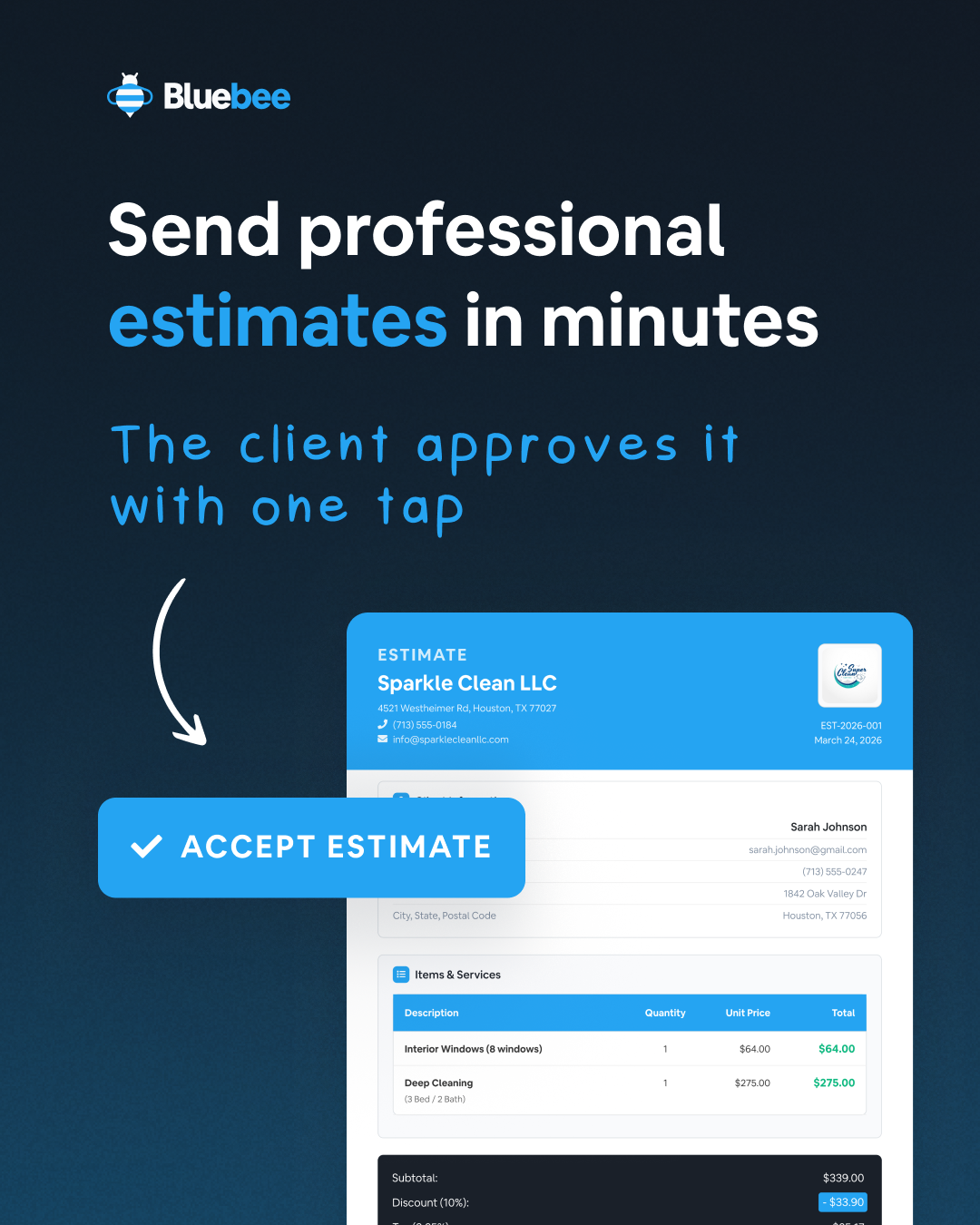
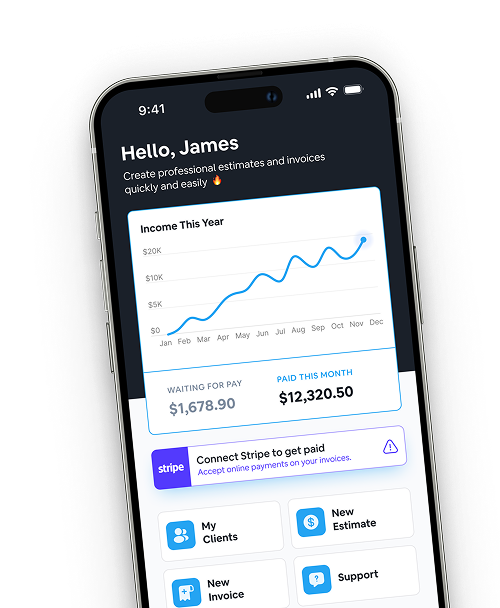
One of the fastest ways to look established on day one is to use a professional estimating tool. BlueBee App lets you build a service library with your standard plumbing services and prices, then create and send branded estimates right from your phone at the job site. When the client approves, you convert it to an invoice and collect payment by card — no chasing checks, no awkward payment conversations. There's a free plan to start with, and the Business plan is $9.99/month. Download it on the App Store.
Step 5: Get Your First Clients
The first 30 days of your plumbing business will define the next three years. Here's the launch strategy that works:
- Google Business Profile: Set this up before anything else. Fill out every field, add photos of your work, and set your service area. This is how 70%+ of local service searches happen.
- Tell everyone you know: Personal network is your fastest source of first jobs. Friends, family, neighbors, your kids' teachers, your barber. Everyone knows someone who needs a plumber.
- Partner with other trades: Electricians, HVAC contractors, general contractors, and real estate agents all need plumbers they can recommend. Offer them the same courtesy.
- Nextdoor and Facebook groups: Local community groups are goldmines for service businesses. Don't spam — answer questions, offer advice, and mention you're available for jobs.
- Google Local Service Ads: Pay-per-lead advertising where you only pay when someone contacts you. Highly effective for plumbing.
Step 6: Manage Your Money Like a Business
The #1 reason plumbing businesses fail isn't lack of work — it's cash flow. You can be booked solid and still run out of money if you're not collecting payments promptly, tracking expenses, or setting aside money for taxes.
- Collect payment at completion: Offer credit card and digital payment options so there's no delay. Waiting 30+ days for checks kills small businesses.
- Set aside 25-30% of revenue for taxes: Self-employment tax alone is 15.3%. Add income tax and state taxes and it adds up fast.
- Separate accounts: Business checking, business savings (for taxes), and personal accounts. Never mix them.
- Track everything: Every receipt, every mile, every material purchase. Use a simple app or even a spreadsheet — just track it.
Step 7: Build Systems for Growth
Once you have steady work (usually 3-6 months in), start building systems:
- Document your pricing: A complete price book means consistent pricing and faster estimates.
- Create a follow-up process: Text or call every client 2-3 days after a job. Ask how everything's working and if they'd leave a Google review.
- Build a maintenance plan: Annual water heater flushes, fixture inspections, and drain maintenance create recurring revenue and loyal clients.
- Track your metrics: Revenue per day, average job value, close rate on estimates, cost per new client.
The Bottom Line
Starting a plumbing business is hard work, but the math is in your favor. Low startup costs, high demand, recession-resistant work, and no ceiling on what you can earn. The plumbers who succeed aren't necessarily the most technically skilled — they're the ones who treat plumbing like a business, not just a trade. Get licensed, price profitably, look professional, market consistently, and manage your money. The rest is just turning wrenches — and you already know how to do that.