
The Pricing Problem in HVAC
Here's a stat that should make every HVAC contractor uncomfortable: according to industry surveys, nearly 60% of independent HVAC businesses are undercharging for their services. Not by a little — by 15-30% on average.
The reasons are predictable. You started your business because you're great at fixing and installing HVAC systems, not because you love spreadsheets and pricing models. So you priced your services based on what competitors seemed to charge, added a little margin, and called it a day. Sound familiar?
The problem is that "competitive pricing" without knowing your actual costs isn't a strategy — it's a gamble. And most HVAC contractors are losing that bet every single day.
Know Your True Costs First
Before you can set profitable prices, you need to know exactly what it costs you to operate. This goes way beyond materials and labor:
- Direct costs: Parts, refrigerant, materials, subcontractor fees
- Labor costs: Hourly wages + payroll taxes + benefits + workers' comp (typically 25-35% on top of base wages)
- Vehicle costs: Fuel, insurance, maintenance, depreciation on your service vans
- Overhead: Rent, utilities, office staff, software, licensing fees, continuing education
- Insurance: General liability, professional liability, commercial auto
- Marketing: Website, advertising, lead generation costs
Add all of these up and divide by your total billable hours per year. That's your true cost per hour of service. For most HVAC contractors in the U.S., this number falls between $85 and $150 per hour — before any profit margin.
The Three Pricing Models That Work
1. Flat-Rate Pricing (Recommended for Most)
Flat-rate pricing means charging a fixed price for each type of service, regardless of how long it takes. This is the gold standard for residential HVAC because clients love knowing exactly what they'll pay upfront, and your revenue isn't penalized when you get faster at the job.
To build a flat-rate book, list your most common services (AC tune-up, furnace repair, duct cleaning, system installation, etc.), calculate the average time and materials for each, add your desired margin, and round to clean numbers. Update your rates annually.
The key advantage: a technician who finishes a job in 45 minutes instead of 90 earns the same revenue, which rewards efficiency and experience.
2. Time & Materials (T&M)
T&M works well for unpredictable jobs — complex commercial repairs, diagnostic work where you won't know the scope until you open things up. Charge an hourly rate plus a markup on materials (typically 25-50% over your cost).
The downside: clients can feel anxious about an open-ended bill, and slow technicians cost you customer satisfaction. Always provide an estimate range upfront, even with T&M jobs.
3. Value-Based Pricing
For premium services (emergency calls, maintenance contracts, system replacements), price based on the value you deliver, not just your costs. An emergency AC repair on a 100-degree July afternoon is worth more to the client than the same repair in March. Your pricing should reflect that.
Emergency and after-hours rates of 1.5x to 2x your standard rate are industry standard and expected by clients. Don't apologize for them — you're providing a premium service.
How to Present Your Prices Professionally
The way you present a price matters almost as much as the price itself. A handwritten number on a piece of paper tells the client you're winging it. A branded, itemized estimate with your logo, clear line items, and terms tells them you're a professional who takes their business seriously.
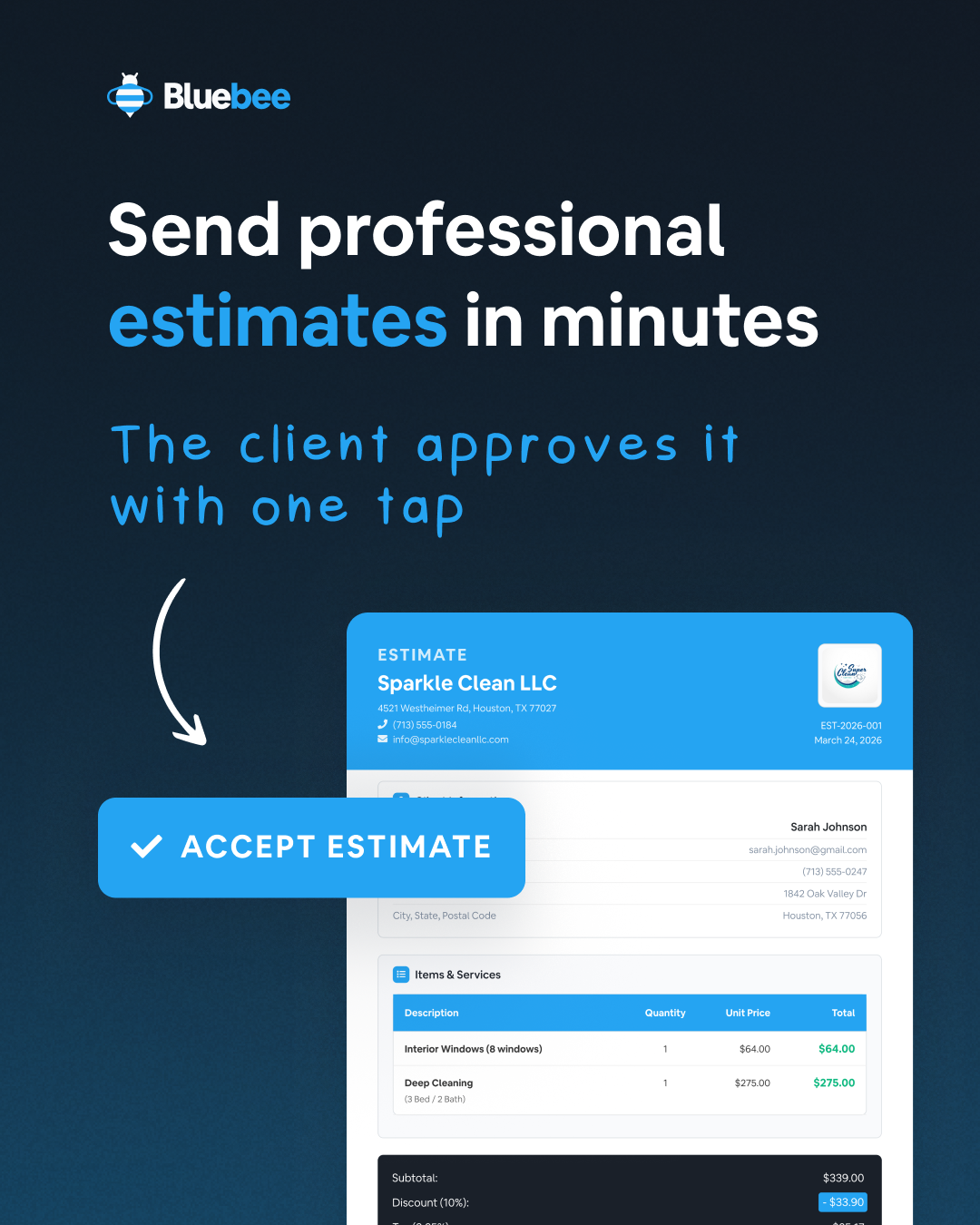
Tools like BlueBee App let you create and send professional, branded estimates right from your phone while you're still at the job site. You can set up a service library with your standard HVAC services and prices, so creating an estimate takes two minutes instead of twenty. The client gets a polished document with your logo and brand colors, and can approve it with a single tap.
When the job is done, you convert that estimate to an invoice and collect payment via credit card — all from the same app. No more chasing checks or awkward payment conversations. Try it free on the App Store.
Service Agreements: Your Most Profitable Revenue Stream
Maintenance agreements (also called service contracts) are the backbone of profitable HVAC businesses. They provide predictable recurring revenue and keep your techs busy during shoulder seasons.
A typical residential maintenance agreement includes:
- Two visits per year (spring AC tune-up + fall heating check)
- Priority scheduling for repairs
- 10-15% discount on parts and labor for repairs
- Price range: $150-$300/year per system
The math is simple: if you have 200 maintenance agreements at $200/year, that's $40,000 in guaranteed annual revenue before you sell a single repair or installation. And maintenance clients are 3-4x more likely to choose you when they need a system replacement.
Common Pricing Mistakes to Avoid
- Matching the cheapest competitor: They're probably losing money. Don't race to the bottom.
- Forgetting to include overhead: If you only account for materials and labor, you're working for free.
- Not raising prices annually: Your costs go up every year. Your prices should too. 3-5% annual increases are standard.
- Giving prices over the phone: Always do an on-site evaluation first. Phone estimates lead to disappointment and lost trust.
- Discounting too easily: If a client pushes back on price, explain the value. Don't immediately drop your rate.
The Bottom Line
Pricing your HVAC services correctly isn't about being the cheapest — it's about being profitable enough to deliver excellent service, pay your team well, invest in your business, and still have something left over. Know your costs, choose the right pricing model for each service, present your prices professionally, and don't be afraid to charge what you're worth. Your best clients want quality and reliability, not the lowest bid.